
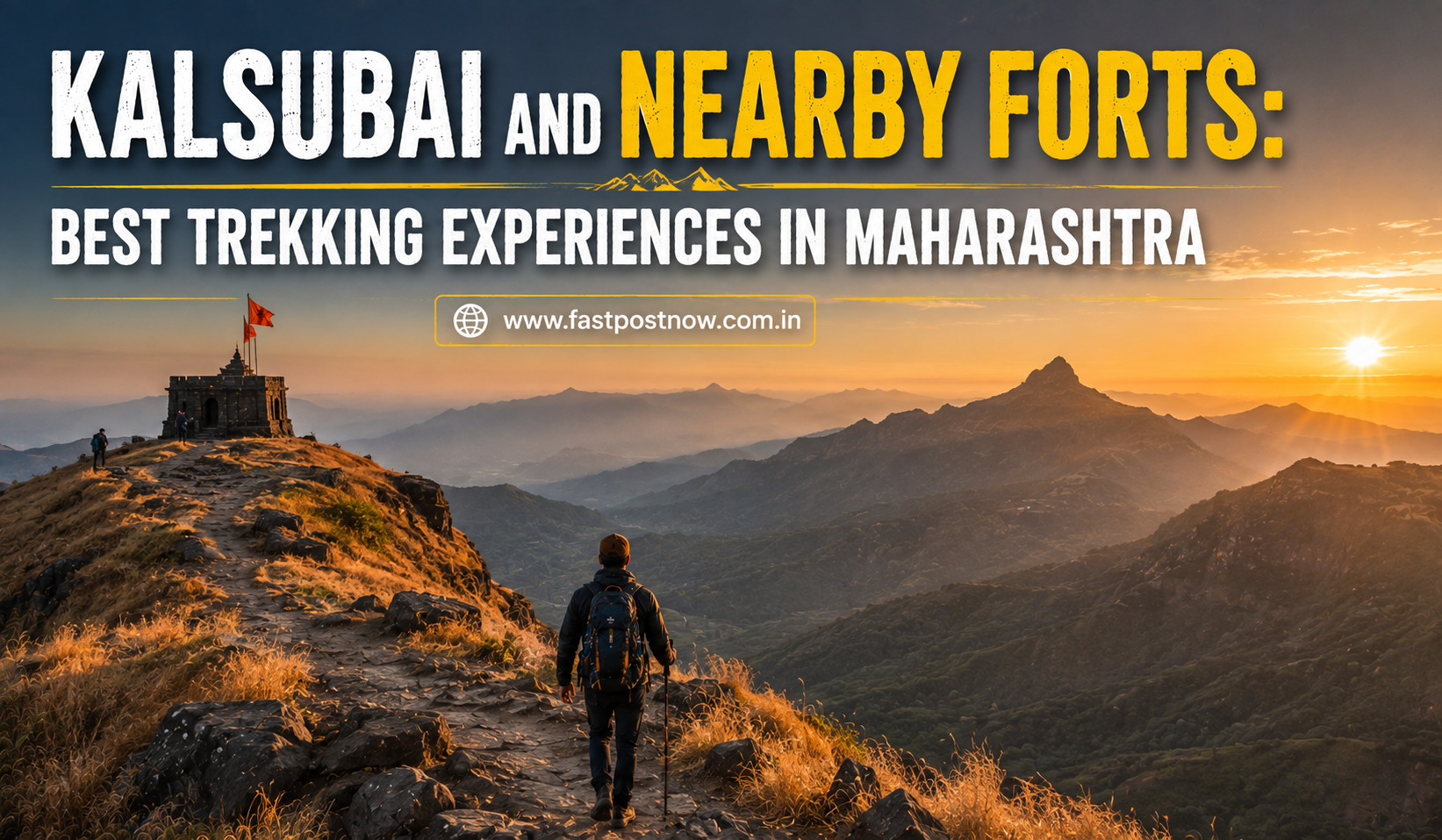
Best Trekking Experiences in Maharashtra
Maharashtra’s Sahyadri ranges have become a favourite destination for trekkers looking for a combination of mountain scenery, historic forts and challenging trails. Among the many peaks in the Western Ghats, Kalsubai holds a special place. At 1,646 metres, it is the highest peak in Maharashtra and attracts trekkers throughout the year. The surrounding region is equally interesting, with several historic forts offering different levels of trekking and a deeper look into the state’s history.
A trip to Kalsubai does not have to be limited to a single summit. The nearby landscape contains forts such as Harishchandragad, Ratangad, Alang, Madan and Kulang, each offering a different trekking experience. Some are relatively accessible, while others demand considerable experience and technical confidence.
The combination of the highest peak in Maharashtra and some of the most dramatic Sahyadri forts makes the Kalsubai region particularly attractive to adventure lovers. From sunrise treks and monsoon landscapes to ancient fortifications and panoramic viewpoints, this part of the Western Ghats offers plenty for travellers to explore.
Kalsubai: Maharashtra’s Highest Peak
Kalsubai is widely recognised as the highest mountain peak in Maharashtra, rising to approximately 1,646 metres above sea level. The peak is located in the Nashik district near the Ahmednagar border and forms part of the Kalsubai range.
The mountain is named after the local deity Kalsubai, whose temple stands at the summit. The religious significance of the peak means that the trek attracts not only adventure enthusiasts but also devotees.
The most popular trekking route begins from Bari village. The trail passes through agricultural land, forested sections and rocky slopes before reaching steeper portions near the summit.
Iron ladders have been installed at some of the more challenging sections, making the route accessible to trekkers who are comfortable with heights. However, these ladders can become slippery during rainfall, so extra caution is required during the monsoon.
Kalsubai Trek Difficulty and Route
The Kalsubai trek is generally considered moderate to difficult. While the route does not usually require advanced technical climbing, the continuous ascent and steep sections can be physically demanding.
Starting from Bari village, trekkers gradually gain elevation as the trail moves toward the summit. The final sections include steep climbs and iron ladders. Reaching the summit requires patience, especially for first-time trekkers.
The journey becomes particularly popular as a night trek because reaching the summit before sunrise allows visitors to watch the landscape gradually brighten across the Sahyadris.
Weather plays an important role in the difficulty. During the monsoon, rain and fog can reduce visibility and make rocky surfaces slippery. Winter is generally more comfortable, especially for trekkers attempting the route overnight.
| Trek | Approx. Elevation | Difficulty | Main Attraction |
| Kalsubai | 1,646 m | Moderate to difficult | Highest peak in Maharashtra |
| Harishchandragad | Around 1,424 m | Moderate to difficult | Konkan Kada |
| Ratangad | Around 1,297 m | Moderate | Nedhe and fort views |
| Alang | Around 1,485 m | Difficult | Technical Sahyadri terrain |
| Madan | Around 1,484 m | Difficult | Rock patches and fort ruins |
| Kulang | Around 1,470 m | Difficult | Long climb and panoramic views |
Elevations and difficulty can vary slightly depending on the route and source.
Best Time for the Kalsubai Trek
The monsoon season transforms Kalsubai into a green mountain landscape. Waterfalls appear along the slopes, clouds surround the peak and the countryside becomes particularly scenic.
However, monsoon trekking comes with additional challenges. Wet rocks, slippery ladders and poor visibility can make the summit approach difficult. Trekkers should avoid taking unnecessary risks simply to reach the top.
Post-monsoon is another excellent period. The landscape retains much of its greenery, while the trails generally become easier to navigate. Winter is especially popular for sunrise treks because temperatures are cooler and visibility is often better.
Summer is less comfortable because exposed sections of the trail can become hot. Trekkers choosing the warmer months should start early and carry enough water.
Harishchandragad: A Historic Fort with Konkan Kada
Harishchandragad is one of the most famous forts near the Kalsubai region and is particularly popular among experienced trekkers. The fort is known for its ancient temples, Kedareshwar Cave and the spectacular Konkan Kada cliff.
Konkan Kada is the fort’s signature attraction. The dramatic cliff faces the Konkan side and offers sweeping views of the valleys and mountains below. Under suitable weather conditions, clouds can form around the cliff, creating a spectacular visual effect.
Harishchandragad has multiple trekking routes, with approaches from Pachnai and Khireshwar among the better-known options. Some routes are relatively accessible, while others involve steep or technical sections.
The fort is best suited to trekkers who want to combine physical adventure with historical exploration. The Harishchandreshwar Temple and Kedareshwar Cave add considerable cultural value to the trip.
Ratangad: A Fort of Rocky Landscapes
Ratangad is another popular fort in the wider Kalsubai region. Located in the Sahyadris near Bhandardara, the fort is known for its distinctive rock formations and beautiful views of surrounding peaks.
The fort is particularly attractive during the post-monsoon season when the surrounding landscape remains green. During winter, clear skies make it easier to appreciate the mountain ranges visible from the summit.
One of Ratangad’s best-known features is the natural rock formation called Nedhe, or the “Eye of the Needle.” The opening in the rock provides a memorable viewpoint and has become one of the fort’s signature landmarks.
The trek is generally considered moderate, making Ratangad a useful choice for trekkers who want something more challenging than a beginner-level fort but less technical than Alang or Madan.
Alang, Madan and Kulang: A Serious Sahyadri Challenge
The Alang-Madan-Kulang range is among the most demanding trekking destinations in the region. The three forts are often discussed together because of their proximity and challenging terrain.
Unlike Kalsubai, which can be approached through a well-established trekking trail, the Alang-Madan-Kulang routes include steep rock sections, difficult climbs and technical passages. Trekkers may need ropes and appropriate climbing equipment on certain sections depending on the route and conditions.
Alang and Madan are particularly known for their steep rock faces. Kulang is generally approached differently but still requires considerable endurance because of the long climb.
These forts are not ideal for inexperienced trekkers. People attempting them should have previous experience with difficult Sahyadri routes and should preferably travel with an experienced trekking group or qualified local guide.
The reward is an extraordinary mountain experience. The summits provide expansive views across the Kalsubai range and surrounding valleys.
Why the Kalsubai Region Is Perfect for Trekking
The greatest strength of the Kalsubai region is its variety. Trekkers can choose a relatively straightforward summit such as Kalsubai, explore a historic destination such as Harishchandragad or take on the technical challenge of Alang-Madan-Kulang.
The landscape also changes dramatically from one season to another. Monsoon brings waterfalls and dense greenery, post-monsoon provides clear skies and vibrant landscapes, while winter offers cooler trekking conditions.
The region also contains villages, temples, forests and reservoirs, allowing visitors to experience more than just the mountain trails.
For adventure enthusiasts, this variety makes the area ideal for multiple trips rather than a single weekend visit.
Things to Carry for Kalsubai and Nearby Fort Treks
Packing requirements depend on the trek, but the basic essentials remain similar. A lightweight backpack is preferable, particularly on steep trails.
Trekkers should carry:
- Good trekking shoes with a strong grip.
- Sufficient drinking water and energy-rich snacks.
- Rain protection during the monsoon.
- First-aid supplies and essential personal medicines.
- Headlamp or torch for early-morning and night treks.
- Power bank and waterproof protection for electronics.
- Warm clothing during winter overnight trips.
Technical forts such as Alang and Madan may require additional equipment depending on the route. Trekkers should never attempt technical sections without understanding the equipment and conditions involved.
Safety Tips for the Kalsubai Region
Mountain trekking requires preparation regardless of difficulty. The Sahyadris can experience sudden weather changes, particularly during the monsoon.
Trekkers should check the weather before travelling and choose routes according to their experience. A trail that is manageable in dry weather can become significantly more difficult after heavy rainfall.
The following precautions are particularly useful:
- Start early and allow enough time for the return journey.
- Avoid approaching exposed cliff edges.
- Use ladders carefully and maintain adequate distance between trekkers.
- Stay on established trails rather than attempting shortcuts.
- Carry enough water, food and emergency supplies.
- Avoid technical routes without suitable experience or guidance.
Safety should always take priority over reaching a summit or taking a photograph.
Best Season to Explore Multiple Forts
Travellers planning a multi-fort trip should consider the post-monsoon and winter periods. These seasons offer a good balance between pleasant temperatures, greener landscapes and relatively manageable trail conditions.
A monsoon trip can be spectacular but is better suited to people who are comfortable with wet and slippery terrain. Some technical routes may become especially risky during heavy rainfall.
Winter is ideal for longer treks because cooler temperatures make sustained climbing easier. Sunrise and overnight treks are also popular during this period.
Nearby Places Around the Kalsubai Region
The region surrounding Kalsubai is not limited to mountains and forts. Bhandardara is one of the most popular nearby destinations and is known for its lake, surrounding hills and scenic landscapes.
Arthur Lake is another major attraction around Bhandardara. The reservoir is surrounded by mountains and provides a peaceful contrast to the more demanding trekking trails.
Randha Falls is particularly impressive during and after the monsoon. The waterfall is located in the broader Bhandardara area and can be included in a weekend itinerary.
For travellers interested in religious tourism, several temples and village shrines can also be found around the region.
Planning a Kalsubai and Fort-Hopping Trip
A multi-fort itinerary requires more planning than a single trek. Travellers should avoid attempting several difficult forts in consecutive days without adequate rest.
A practical approach is to combine one major trek with lighter sightseeing. For example, Kalsubai can be paired with Bhandardara attractions, while Ratangad can be explored on another day.
Experienced trekkers may plan Alang-Madan-Kulang as a separate dedicated adventure rather than adding it to a busy itinerary.
The most important factor is not the number of forts completed but the quality and safety of the experience.
Responsible Trekking in the Sahyadris
The growing popularity of Maharashtra’s trekking destinations has increased pressure on fragile mountain environments. Plastic waste, noise and careless tourism can damage landscapes that took centuries to develop.
Trekkers should carry their waste back, avoid disturbing wildlife and stay on established trails wherever possible. Historic structures should never be damaged or marked.
Local villages also play an important role in the trekking economy. Supporting local guides, small food businesses and homestays can contribute to the communities surrounding these destinations.
Responsible tourism ensures that the Sahyadris remain enjoyable for future generations.
Final Thoughts
Kalsubai and the surrounding forts represent one of Maharashtra’s richest trekking landscapes. The region offers an unusual combination of high mountain peaks, historic fortifications, ancient temples, forests and spectacular viewpoints.
Kalsubai provides the satisfaction of climbing Maharashtra’s highest peak, while Harishchandragad adds history and the unforgettable Konkan Kada. Ratangad offers a moderate fort adventure with distinctive rock formations, while Alang, Madan and Kulang provide a serious challenge for experienced trekkers.
Choosing the right destination according to fitness and experience is essential. Not every fort is suitable for every trekker, and weather conditions can dramatically alter the difficulty of a route.
For the best overall experience, post-monsoon and winter are excellent seasons to explore the region. Monsoon remains visually spectacular but demands greater caution.
Whether the goal is a sunrise at Kalsubai, a weekend around Bhandardara, a historical exploration of Harishchandragad or a challenging Alang-Madan-Kulang expedition, the Sahyadris offer plenty of reasons to return. With proper preparation and responsible trekking habits, the Kalsubai region can provide some of the most memorable mountain experiences in Maharashtra.
Frequently Asked Questions
Is the Kalsubai Trek difficult?
Kalsubai is generally considered moderate to difficult because of the continuous ascent, steep sections and ladders near the summit. Good fitness and suitable footwear make the trek more manageable.
Which fort is near Kalsubai?
Several forts are located in the broader Kalsubai and Bhandardara region, including Harishchandragad, Ratangad, Alang, Madan and Kulang.
What is the best time to visit Kalsubai?
Post-monsoon and winter are generally comfortable periods for trekking. Monsoon offers spectacular greenery but also brings slippery terrain and reduced visibility.
Can beginners climb Kalsubai?
Beginners with reasonable fitness can attempt Kalsubai, especially with an experienced group. They should prepare for a sustained uphill climb and take extra care during wet conditions.
Are Alang, Madan and Kulang suitable for beginners?
These forts are significantly more challenging than Kalsubai and include steep and technical terrain. Beginners should not attempt them without appropriate experience, equipment and expert guidance.