Books can play an important role in a child’s school years. While classroom lessons introduce children to essential concepts, books give them the opportunity to explore those ideas at their own pace. A good educational book can explain a difficult topic in an approachable way, answer a child’s questions, encourage curiosity, and make learning feel like an adventure rather than a task.
For school-age children, educational reading does not have to mean pages of exercises or traditional textbooks. Stories, science books, biographies, activity books, atlases, history books, and illustrated reference guides can all contribute to a child’s learning. The most effective choices combine useful information with engaging writing and age-appropriate presentation.
Choosing educational books is therefore less about finding the most advanced title and more about finding books that match a child’s interests, reading ability, and stage of development.
Why Educational Books Matter for School-Age Children
School-age children are naturally curious. They begin asking more detailed questions about how things work, why events happen, and what exists beyond their immediate surroundings. Books can provide answers while also encouraging children to ask better questions.
Reading about subjects outside the classroom can strengthen knowledge across several areas. A child who reads about planets may become interested in astronomy. Someone fascinated by animals may begin exploring habitats and ecosystems. A story about a historical figure might inspire further interest in history or geography.
Educational books can also strengthen general reading skills. Children encounter new vocabulary, longer explanations, unfamiliar concepts, and different styles of writing. These experiences can make them more comfortable with increasingly complex material as they progress through school.
A strong educational book can help children:
- Expand vocabulary and general knowledge
- Develop curiosity and independent learning habits
- Understand difficult subjects through accessible explanations
- Connect classroom concepts with real-world examples
What Makes an Educational Book Effective?
An educational book should provide accurate information, but information alone does not guarantee that children will enjoy reading it. Presentation matters.
Children are more likely to engage with a book when the writing feels clear and approachable. Illustrations, diagrams, photographs, timelines, maps, charts, and examples can make unfamiliar ideas easier to understand.
The book should also provide an appropriate level of challenge. A book that is far below a child’s ability may become boring, while one filled with complicated terminology can discourage independent reading.
The strongest educational books often answer a child’s immediate question while introducing new questions along the way. Instead of simply saying what something is, they encourage children to wonder why it works, how it developed, or what might happen next.
Science Books for Curious Young Minds
Science is an excellent subject for educational reading because children naturally encounter scientific questions in everyday life. Why does rain fall? How do plants grow? Why do animals behave differently? What causes the moon to change shape?
Well-designed children’s science books can turn these questions into exciting discoveries. Books about the human body, animals, space, oceans, weather, inventions, and the natural world can introduce scientific concepts without overwhelming young readers.
Books About Space and Astronomy
Space-related books are particularly popular with school-age children. They can introduce planets, stars, moons, galaxies, spacecraft, and the history of space exploration.
Illustrations and diagrams are especially useful in astronomy books because children can visualize enormous distances and objects that cannot be observed easily in everyday life.
Books About Nature and Animals
Books about animals and the natural world can help children understand habitats, food chains, adaptation, and biodiversity. They can also encourage children to observe nature around them.
A book about insects, for example, may encourage a child to notice different insects in a garden. A book about forests may inspire questions about trees, birds, and ecosystems.
History Books That Bring the Past to Life
History can sometimes seem like a collection of dates and names when presented without context. Children’s history books can make the subject more meaningful by focusing on people, places, inventions, discoveries, and everyday life.
Biographical books are particularly effective because they introduce history through individual experiences. Learning about a scientist, explorer, artist, inventor, leader, or other influential person can help children understand how people shaped events and ideas.
Illustrated timelines and historical maps can also help children understand when and where events occurred. Rather than memorizing isolated facts, children can begin to see connections between different periods.
Good history books often explore:
- Important people and their achievements
- Major discoveries and inventions
- Ancient civilizations and cultures
- Everyday life in different historical periods
This approach allows children to see history as a collection of human stories rather than simply a school subject.
Geography and World Exploration Books
Geography books can expand a child’s understanding of the world beyond their immediate environment. Maps, flags, landmarks, climates, landscapes, and cultural information can introduce children to places they may never have visited.
Atlases designed for children can be especially useful because they combine geography with visual exploration. A child may begin by looking for countries on a map and eventually become interested in languages, climates, wildlife, or famous landmarks.
Books about different regions can also encourage children to appreciate the variety of environments and communities around the world.
Mathematics Books That Make Numbers Interesting
Math does not have to be limited to worksheets and calculations. Educational books can introduce mathematical thinking through puzzles, stories, patterns, shapes, measurements, logic problems, and real-world examples.
For younger school-age children, books involving counting, shapes, fractions, and simple problem-solving can reinforce classroom learning. Older children may enjoy books that introduce probability, geometry, coding concepts, mathematical puzzles, or unusual number facts.
When math is presented through an interesting problem or story, children may become more willing to explore a concept that initially seems difficult.
Books About Technology and Inventions
Children are growing up surrounded by technology, making books about inventions and engineering particularly relevant. These books can explain how everyday objects work and introduce the people and ideas behind important inventions.
Books about robotics, computers, transportation, engineering, and communication can encourage children to think about how technology solves problems.
They can also inspire creative thinking. After learning how a bridge, machine, or simple device works, a child may want to design something of their own.
Educational Storybooks
Not every educational book needs to be nonfiction. Fiction can teach children about communication, empathy, decision-making, relationships, responsibility, and different perspectives.
A well-written story can introduce a child to experiences that differ from their own. Characters may face challenges involving friendship, family, school, mistakes, confidence, or cultural differences.
Stories can therefore support both academic and social learning. They encourage children to think about why characters behave in particular ways and what consequences their choices may have.
Activity and Puzzle Books
Activity books can provide a more hands-on form of learning. Word searches, puzzles, mazes, drawing activities, logic challenges, and simple experiments can reinforce concepts while keeping children engaged.
These books can be particularly useful during school breaks or quiet periods when children want something productive to do without following a formal lesson.
However, activity books work best when they complement other types of reading rather than replacing stories and informational books entirely.
How to Choose Educational Books by Age
Children’s abilities vary considerably, so age ranges should be treated as general guidance.
| Age Group | Suitable Educational Book Types |
| 5–7 years | Picture encyclopedias, simple science books, early readers, basic activity books |
| 7–9 years | Illustrated nonfiction, biographies, geography books, history stories |
| 9–12 years | Detailed science books, atlases, biographies, reference books, subject-specific nonfiction |
| 12+ years | More advanced nonfiction, specialized science, history, technology, and literature |
Reading ability and interest should always be considered alongside age. A child may be advanced in one subject and still prefer simpler books in another.
Creating an Educational Reading Routine
Children are more likely to develop strong reading habits when books are easily accessible. A small bookshelf, reading corner, or dedicated space can make educational reading feel like a normal part of everyday life.
Parents can also allow children to choose some of their own books. Choice gives children a sense of independence and can help them discover subjects they genuinely enjoy.
A useful home collection can include:
- One or two books connected to current school topics
- A science or nature book
- A biography or history title
- A fun book chosen entirely by the child
There is no need to insist that every reading session be educational. A child who reads for pleasure is also developing important language and comprehension skills.
Encouraging Children to Explore Beyond the Book
An educational book can be the beginning of learning rather than the end. If a child becomes interested in volcanoes, for example, encourage them to draw a volcano, build a simple model, observe rocks, or ask questions about how eruptions occur.
Similarly, a book about space might lead to stargazing, while a geography book could inspire map-based games or an interest in different countries.
These follow-up activities help children understand that learning is not confined to school or the pages of a book.
Frequently Asked Questions
1. What are the best educational books for school-age children?
The best books depend on a child’s age, reading level, and interests. Science books, biographies, history books, atlases, nature guides, educational storybooks, and activity books are all useful options.
2. Should children read nonfiction or fiction?
Both are valuable. Nonfiction builds factual knowledge and introduces specific subjects, while fiction develops language, imagination, empathy, and understanding of different perspectives.
3. How can I make educational books more interesting?
Choose subjects your child already enjoys and look for books with illustrations, diagrams, stories, experiments, puzzles, or real-world examples. Allowing children to choose some of their own books can also increase motivation.
4. How many educational books should a child read?
There is no required number. Consistent reading is more important than reaching a particular total. Even a few pages each day can gradually build knowledge and reading confidence.
5. Should educational books replace school textbooks?
No. Educational books are best viewed as a complement to classroom learning. They can provide additional explanations, examples, perspectives, and opportunities to explore topics in greater depth.
Final Thoughts
The best educational books for school-age children do more than deliver information. They encourage children to wonder, investigate, question, and make connections between ideas.
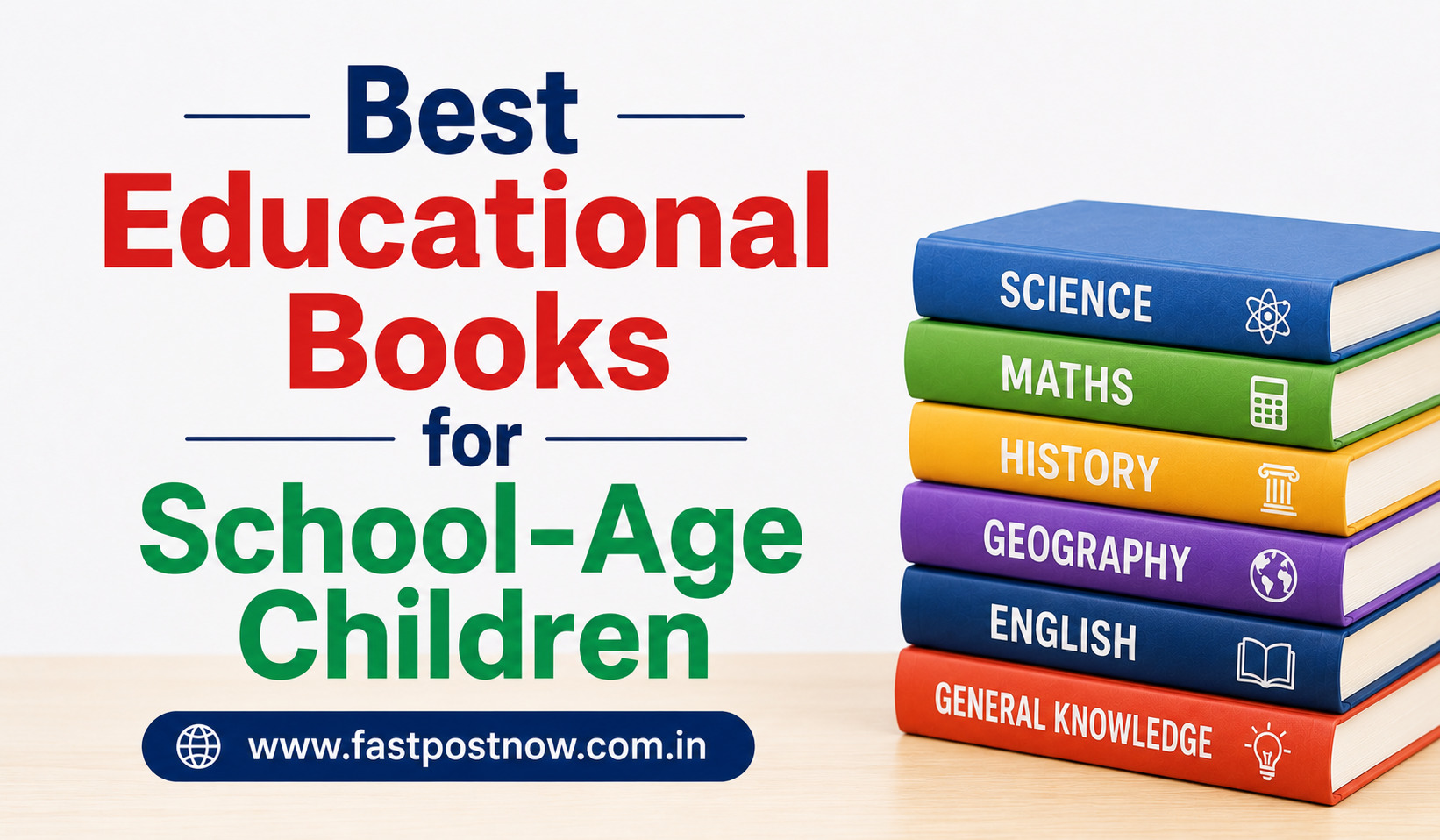
A well-rounded collection can include science, history, geography, mathematics, technology, biographies, nature, stories, and activity books. The right mix will depend on the child’s age and interests, but variety is usually more valuable than focusing on a single subject.
Most importantly, educational reading should not feel like extra homework. When children are allowed to explore topics that genuinely fascinate them, books can become tools for independent discovery. A single interesting book may answer one question while creating ten more—and that curiosity is one of the most valuable things a child can take from reading.