Some luxury cars are designed to impress through technology. Others focus on comfort, space or outright performance. Aston Martin takes a different route by bringing these qualities together through a strong emphasis on design, craftsmanship and driving emotion.
The British marque has built its reputation around cars that look distinctive without becoming visually excessive and deliver serious performance without losing their grand-touring character. From the Vantage and DB12 to the Vanquish and DBX707, Aston Martin’s modern range demonstrates how luxury can be combined with genuine sports-car engineering.
For buyers looking at premium performance cars in India, Aston Martin occupies a particularly exclusive space. Its appeal is not based simply on how much power a car produces. It is the sense that the vehicle has been created as an object of craftsmanship as much as a machine for transportation.
Design Is at the Heart of Aston Martin
Aston Martin’s strongest advantage has always been its design identity.
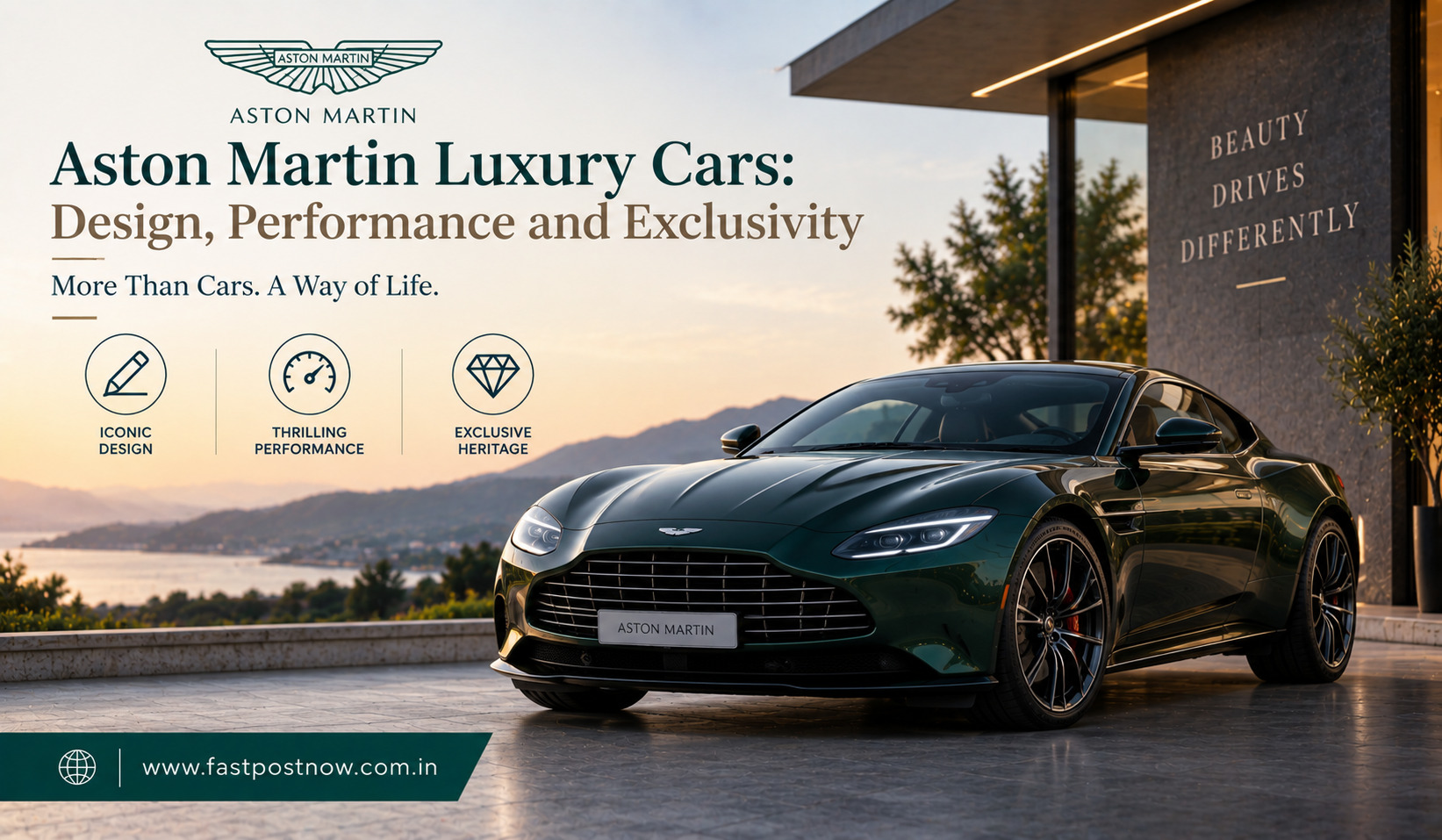
The cars typically feature long, flowing proportions, a distinctive front grille, sculpted bodywork and carefully integrated aerodynamic elements. Instead of covering every surface with aggressive styling, Aston Martin often allows the overall shape to create the drama.
The current Vantage is a good example. Aston Martin describes it as a front-engine, rear-wheel-drive sports car with a wider stance and a redesigned front end. The current model uses a 4.0-litre twin-turbo V8 and produces 680 PS and 800 Nm.
The important point is that the performance hardware does not overwhelm the design. The car still looks like a sophisticated British sports car rather than a machine designed solely for a racetrack.
The DB12 Blends Grand Touring With Supercar Performance
The Aston Martin DB12 represents perhaps the clearest expression of the brand’s modern luxury philosophy.
Aston Martin calls it a “Super Tourer,” positioning it between traditional grand touring comfort and high-performance sports-car capability. The current DB12 uses a 4.0-litre twin-turbo V8 producing 680 PS and 800 Nm. The official specification lists a 0–100 km/h time of 3.6 seconds and a maximum speed of 325 km/h.
Those numbers are impressive, but the DB12 is not simply about acceleration.
Its purpose is to make high-speed travel feel special while retaining the comfort and refinement expected from a luxury car. The cabin uses premium materials and a driver-focused layout, while Aston Martin has also integrated modern connectivity, navigation and over-the-air software capabilities.
This combination is important because the luxury performance segment is no longer satisfied with raw speed alone. Buyers also expect the car to feel sophisticated every time they use it.
Vanquish Takes Performance to Another Level
If the DB12 represents balanced grand touring, the current Vanquish pushes the Aston Martin formula further toward extreme performance.
The Vanquish is powered by a 5.2-litre twin-turbo V12 mounted in a front-mid position and driving the rear wheels. Aston Martin lists 835 PS and 1,000 Nm of torque, with 0–100 km/h taking 3.3 seconds and top speed reaching 345 km/h.
Those figures place the Vanquish firmly in the high-performance exotic-car category.
Yet the design remains elegant rather than purely aggressive. This is a significant part of Aston Martin’s character. The company does not need to abandon sophistication simply because a car becomes faster.
The Vanquish also uses a ZF eight-speed automatic transmission and an electronic rear differential. Its engineering combines strong straight-line performance with a chassis designed to deliver control and driver involvement.
DBX707 Proves That Luxury SUVs Can Have Character
The Aston Martin story would be incomplete without the DBX.
Luxury buyers increasingly want SUVs, but many performance SUVs can feel disconnected from the character of a traditional sports car. Aston Martin attempted to solve that problem by creating an SUV that carries the company’s design and performance philosophy into a taller, more practical body.
The current Aston Martin range lists the DBX707 as the flagship performance SUV. Aston Martin describes the DBX707 as using a 4.0-litre twin-turbo V8, with 900 Nm of torque and a top speed of 193 mph. The company also highlights its five-seat configuration.
The DBX707 is therefore more than a luxury SUV with an Aston Martin badge. It is designed to provide the practicality of an SUV while maintaining the performance-focused character expected from the marque.
For affluent buyers who need greater everyday usability, this makes the DBX particularly important.
Craftsmanship Gives Aston Martin Its Personality
Performance figures can be measured. Craftsmanship is much harder to quantify.
Aston Martin’s appeal comes partly from the way its cars are presented as carefully crafted products rather than mass-market machines. The company describes its philosophy around combining modern technology with time-honoured craftsmanship and distinctive styling.
This philosophy can be seen in the interior detailing, seat design, trim combinations and extensive personalisation possibilities.
For a luxury customer, these details matter because exclusivity is not only about owning a rare badge. It is also about feeling that the car reflects individual taste.
Exclusivity Is More Than a Price Tag
Aston Martin operates in a part of the automotive market where exclusivity is fundamental.
Unlike mainstream manufacturers producing hundreds of thousands of vehicles, Aston Martin’s cars are aimed at a much smaller audience. The company itself describes its ambition as being the world’s most desirable ultra-luxury British brand.
That positioning changes the ownership experience.
An Aston Martin is unlikely to be selected simply because it has the lowest running cost or the longest equipment list. Customers are usually buying into design, heritage, craftsmanship and individuality.
This makes the brand particularly attractive to buyers who want something less predictable than the more common luxury performance choices.
Technology Supports the Experience Rather Than Defining It
Modern Aston Martin cars are not technologically basic. The DB12, for example, includes digital displays, connected-car functions, navigation, voice control and smartphone integration. The company has also introduced over-the-air updates and connected services.
However, technology is not allowed to become the entire identity of the vehicle.
That distinction matters in a luxury car. A huge screen can be impressive when a vehicle is new, but design, materials, seating comfort and driving character continue to influence how special a car feels years later.
Aston Martin’s approach is therefore to use technology to improve the experience while allowing the physical character of the car to remain central.
Performance Without Losing Elegance
One of Aston Martin’s most interesting qualities is its ability to combine speed with elegance.
The Vantage is clearly the sports-car choice, while the DB12 provides a more luxurious grand-touring experience. The Vanquish sits at the top of the front-engine performance hierarchy, while the DBX707 adapts the same philosophy to an SUV.
This gives the brand a broader identity than simply being a manufacturer of fast cars.
The goal is to make performance feel sophisticated.
A powerful engine, for example, is only one part of the experience. Steering response, seating position, suspension calibration, exhaust character, cabin atmosphere and exterior proportions all influence how the driver connects with the vehicle.
Why Aston Martin Remains Different
The luxury automobile market has become increasingly competitive. Many manufacturers now offer vehicles with enormous power, advanced driver assistance, sophisticated infotainment and premium interiors.
Aston Martin’s distinction comes from the way these elements are combined.
The brand does not compete purely on technology or acceleration. Instead, it sells an overall sense of occasion.
The current Vantage brings sports-car focus. The DB12 adds grand-touring refinement. The Vanquish introduces extreme V12 performance, while the DBX707 expands the brand into the high-performance SUV segment. All four are part of Aston Martin’s current model family rather than discontinued products.
That range allows Aston Martin to serve different interpretations of the luxury buyer without losing its recognizable personality.
Conclusion
Aston Martin luxury cars continue to attract attention because they combine three qualities that are difficult to reproduce together: beautiful design, serious performance and exclusivity.
The Vantage demonstrates the brand’s sports-car character, while the DB12 shows how high performance can coexist with long-distance luxury. The Vanquish takes the formula into V12 territory, and the DBX707 proves that an SUV can still carry the emotional appeal of a performance car.
For Indian luxury-car buyers, Aston Martin offers something beyond a conventional premium vehicle. Its cars are designed to create an emotional connection through shape, sound, craftsmanship and performance.
That is ultimately what makes Aston Martin different. It does not treat luxury as a collection of expensive features. Instead, it builds the idea of luxury around the entire experience of owning, seeing and driving the car.