
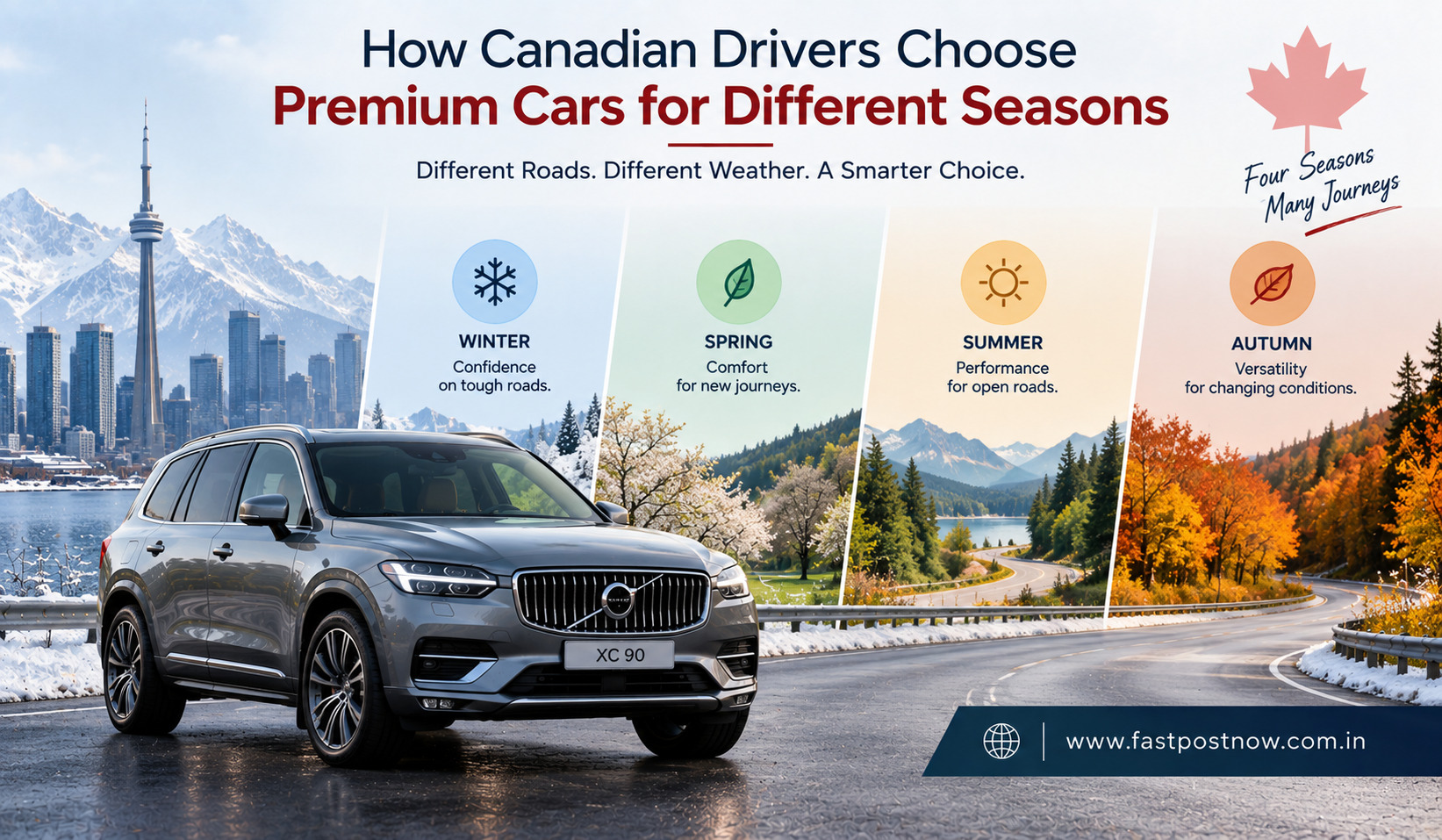
Canada is a country where choosing a premium car is not only about styling, performance or cabin comfort. The seasons can dramatically change the way a vehicle is used. A car that feels perfect during a warm summer drive may need a completely different setup when temperatures fall, roads become icy and snow starts covering the streets.
For Canadian drivers, this makes seasonal versatility an important part of choosing a luxury vehicle. All-wheel drive, winter tyres, ground clearance, heating systems, visibility technology and predictable handling can become more valuable than simply having a powerful engine.
At the same time, Canada’s warmer months create a different set of priorities. Long road trips, dry highways and comfortable city driving can put greater emphasis on ride quality, cabin technology, efficiency and performance.
Premium vehicles such as the BMW X5, Audi Q5 and Volvo XC90 show why luxury SUVs are particularly attractive in markets with changing weather. All three are also currently represented in the Indian market, making them useful examples of how premium manufacturers engineer vehicles for different driving conditions.
Winter Changes What Luxury-Car Buyers Value
Canadian winters can make driving considerably more demanding. Snow, freezing temperatures, icy roads and reduced visibility can affect acceleration, braking and steering.
This is where features that might seem secondary during summer become much more important.
All-wheel drive can help a vehicle distribute power to wheels with available grip, although it does not eliminate the need for appropriate winter tyres or careful driving. Volvo’s official XC90 support information, for example, explains that its AWD system automatically distributes driving force to wheels to improve traction. Volvo also recommends winter tyres on all wheels where snow or ice is a risk.
For Canadian buyers, therefore, the drivetrain is only one part of the winter equation.
Winter Tyres Can Matter More Than a Luxury Badge
A premium car may have sophisticated traction control and all-wheel drive, but tyres remain one of the most important connections between the vehicle and the road.
Winter tyres are designed to maintain their characteristics at low temperatures and provide better traction on snow and ice than many conventional tyres.
This is particularly relevant for luxury SUVs equipped with large wheels. Bigger wheels can look attractive and may improve handling on dry roads, but Canadian winter conditions require buyers to consider tyre availability, sidewall profile and suitability for snow-covered roads.
Volvo’s official winter guidance specifically recommends winter tyres on all four wheels when there is a risk of snow or ice.
A Canadian driver choosing a premium vehicle should therefore think beyond the factory specification and consider the complete winter-wheel setup.
The BMW X5 Fits the Four-Season Luxury-SUV Formula
The BMW X5 is an example of a premium SUV designed around a combination of performance, comfort and traction technology.
BMW India’s current model catalogue lists the X5 in India, including the X5 xDrive40i and X5 xDrive30d. The xDrive name refers to BMW’s all-wheel-drive system, making the X5 an interesting example when discussing vehicles suited to changing road conditions.
For a Canadian driver, an SUV of this type can provide useful versatility. The elevated seating position can offer a commanding view in traffic, while the available all-wheel-drive system can assist with traction when roads become slippery.
But the real advantage comes from combining those capabilities with proper winter tyres and sensible driving.
During summer, the same vehicle can become a comfortable long-distance machine. That ability to transition between seasons is one reason premium SUVs have become so popular in markets with demanding weather.
Audi Q5 Shows Why All-Wheel Drive Remains Popular
The Audi Q5 provides another example of a premium SUV designed around year-round usability.
Audi India currently lists the Q5 and describes it as using quattro all-wheel drive. The company says its fully variable quattro system can distribute drive forces as required between the wheels, while Audi drive select allows the driver to adjust vehicle characteristics through different modes.
For Canadian drivers, this kind of drivetrain technology can be useful when conditions change quickly.
A dry road in the morning can become slippery after snowfall or freezing rain. An all-wheel-drive system cannot overcome the laws of physics, but it can provide additional traction when accelerating compared with a two-wheel-drive setup.
The Q5’s combination of a relatively manageable SUV size, premium cabin and all-wheel-drive capability makes this type of vehicle attractive for drivers who want one car for multiple seasons.
Volvo XC90 Places Strong Emphasis on Winter Preparedness
The Volvo XC90 is particularly interesting because Volvo provides detailed guidance on preparing the vehicle for winter conditions.
The current XC90 in India is listed as a B5 AWD mild-hybrid model with a petrol engine, automatic transmission and seven seats. Volvo Cars India lists 250 hp, 360 Nm of torque and a 0–100 km/h time of 7.7 seconds for the current specification.
For the Canadian market, the broader lesson is more important than the numbers. Volvo’s winter guidance recommends checking coolant, engine oil, battery condition and washer fluid before the cold season. It also recommends winter tyres where snow or ice is expected.
That illustrates an important point about seasonal premium-car ownership: buying the right vehicle is only the beginning. Preparing it correctly for the season can be equally important.
Visibility Becomes a Major Winter Consideration
Canadian winters can reduce visibility through snowfall, road spray, fog and darkness.
Premium vehicles often offer features such as heated mirrors, advanced lighting, parking cameras and driver-assistance systems that can make daily driving easier.
The Volvo XC90, for example, currently offers a 360-degree camera system and various driver-support technologies. Volvo says its safety systems can help detect certain vehicles, pedestrians, cyclists and larger animals and can provide warnings or braking assistance in certain situations.
These systems are particularly useful when parking or manoeuvring in poor visibility, although they should never be treated as replacements for attentive driving.
Summer Creates a Completely Different Priority List
When snow disappears and temperatures rise, Canadian drivers can use their premium cars very differently.
Summer encourages road trips, highway travel and outdoor activities. Under these conditions, buyers may place greater emphasis on comfortable seats, quiet cabins, cooling performance, luggage space and driving enjoyment.
This is where a premium SUV becomes particularly versatile.
The BMW X5 can combine long-distance comfort with performance, while the Audi Q5 offers a balance of practicality and dynamic handling. The seven-seat Volvo XC90 is especially useful for families who regularly travel with more passengers or luggage.
A vehicle that handles winter duties well does not necessarily have to feel like a specialised winter machine during the rest of the year.
Spring and Autumn Require Flexibility
The transition seasons can be more unpredictable than they initially appear.
Spring may bring melting snow, standing water and potholes created by freeze-thaw cycles. Autumn can combine rain, falling leaves, early darkness and sudden temperature drops.
This is where predictable handling and good visibility become valuable.
Drivers may also begin changing from winter tyres to all-season or summer-oriented setups depending on local temperatures and regulations. The timing should be based on actual conditions rather than simply the calendar.
Premium SUVs with sophisticated traction and stability systems can provide confidence, but drivers still need to adjust their behaviour to changing road surfaces.
Electric Luxury Cars Add Another Seasonal Consideration
Electric vehicles introduce an additional factor: temperature can influence battery performance and energy consumption.
Cold weather can increase energy use because the vehicle needs to heat the cabin and battery. Drivers considering a premium electric car in Canada therefore need to think about home charging, charging infrastructure, winter range and pre-conditioning.
This does not mean electric luxury cars are unsuitable for Canadian winters. It simply means seasonal planning becomes more important.
The same principle applies to every powertrain. Petrol, diesel, hybrid and electric vehicles each respond differently to temperature and driving conditions.
What Canadian Drivers Should Really Look For
The ideal premium car for Canada is not necessarily the most powerful or most expensive one.
A better choice is a vehicle that matches the driver’s actual seasonal needs.
For someone living in an area with heavy snowfall, all-wheel drive, winter tyres, strong heating and good visibility may be high priorities. For another driver who spends most of the year in a major city, compact dimensions, parking technology and a comfortable cabin could matter more.
Families may value three-row seating, while frequent highway travellers may prioritize quietness and long-distance comfort.
The key is to consider how the vehicle will behave throughout the entire year rather than judging it during one season.
Conclusion
Canadian drivers face a unique combination of seasonal conditions, which makes year-round versatility particularly important when choosing a premium car.
Winter places greater emphasis on traction, winter tyres, visibility and cold-weather preparation. Spring and autumn demand adaptability as road conditions change quickly, while summer shifts attention toward comfort, performance, road-trip practicality and cabin technology.
Premium SUVs such as the BMW X5, Audi Q5 and Volvo XC90 demonstrate how modern luxury vehicles can combine everyday usability with advanced drivetrain and safety technologies. These models are also currently represented in India’s market, satisfying the model-availability requirement for this article.
Ultimately, choosing a luxury car for Canada is less about finding one feature that solves every problem and more about creating a balanced package. The right vehicle, appropriate tyres, regular maintenance and responsible driving together make a premium car far better prepared for Canada’s changing seasons.