
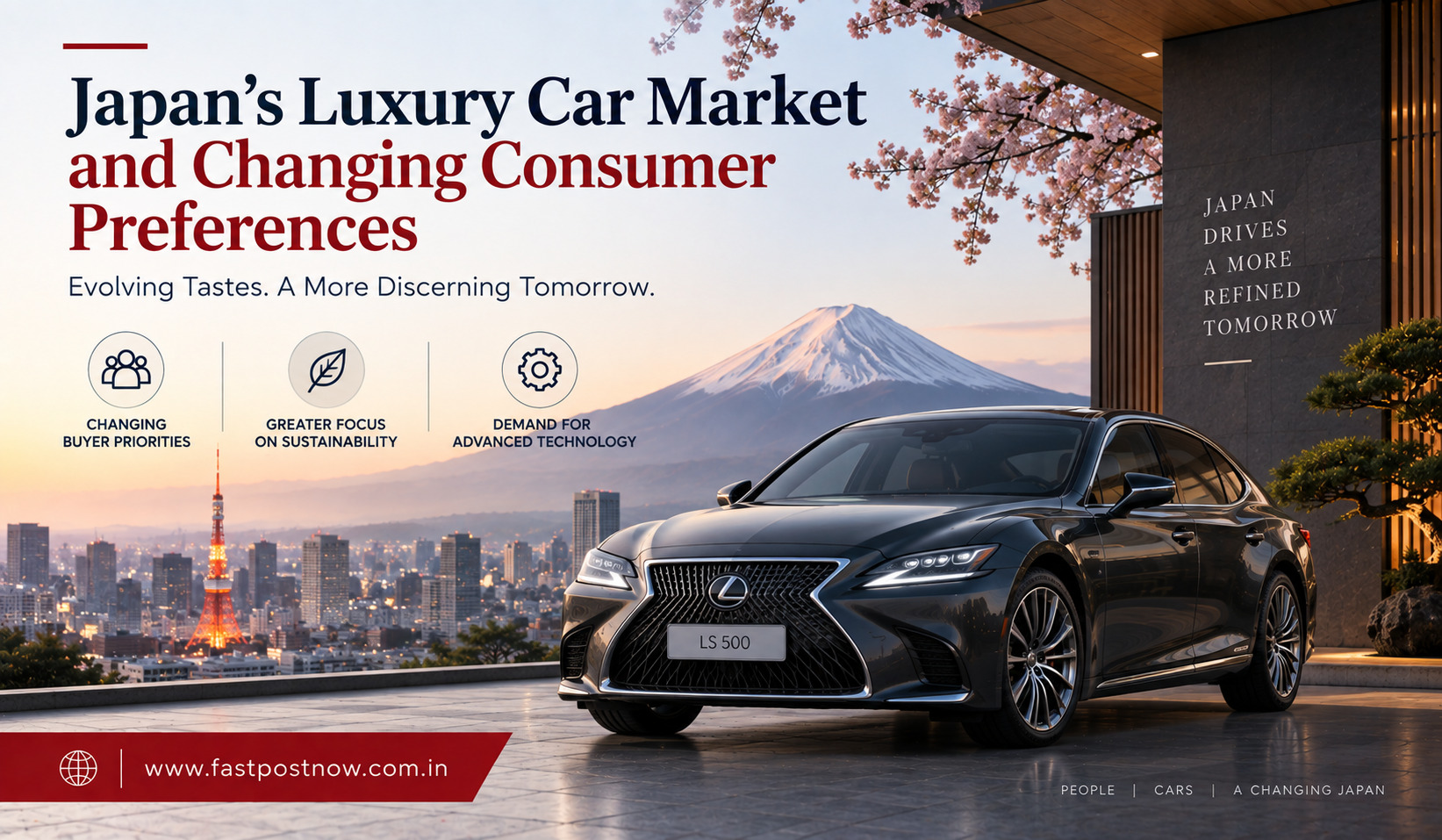
Japan has long been known for building cars that combine engineering precision, comfort and understated design. However, the country’s luxury car market is changing as buyers develop new expectations about technology, electrification, comfort and personal identity. Luxury vehicles in Japan are no longer judged only by engine performance or exterior prestige. Increasingly, buyers are considering efficiency, advanced safety, cabin experience, brand heritage and how well a vehicle fits their lifestyle.
This shift is creating an interesting luxury automotive landscape in Japan. Traditional Japanese manufacturers such as Toyota and Lexus continue to protect their reputation for craftsmanship while introducing electrified powertrains, connected technology and new interpretations of premium mobility.
A Different Definition of Luxury in Japan
Luxury car preferences in Japan have traditionally been different from those in some Western markets. Instead of choosing a vehicle simply because it looks large or aggressive, many Japanese luxury-car buyers value refinement, quietness and attention to detail.
The Toyota Century is one of the clearest examples. It has historically been positioned as a chauffeur-oriented flagship associated with executives and important passengers. Toyota has described the Century as a vehicle built around Japanese craftsmanship, dignity and rear-seat comfort.
This approach reflects a broader Japanese idea of luxury. A premium car does not necessarily need to be visually extravagant. Instead, quality can be communicated through materials, craftsmanship, ride comfort and the experience inside the cabin.
That philosophy remains important, but modern buyers are adding new requirements to it.
Lexus Continues to Shape Japan’s Premium Market
Lexus plays a major role in Japan’s luxury automotive sector. Its Japanese lineup includes models across SUVs, sedans, MPVs and coupes, including the LX, GX, RX, NX, RZ, LBX, LS, ES, IS, LM and LC.
The wide range reflects how luxury customers have become more diverse. Some buyers want a premium SUV for everyday family use, while others prefer a chauffeur-focused MPV or a performance-oriented coupe.
Lexus has also increasingly connected luxury with electrification. Hybrid technology has been an important part of the brand’s strategy, while battery-electric vehicles are becoming more prominent as manufacturers respond to changing expectations around emissions and efficiency.
This does not mean traditional luxury features are disappearing. Instead, technology is being added to the definition of premium ownership.
Electrification Is Changing Luxury Expectations
One of the biggest changes in Japan’s luxury car market is the growing importance of electrified powertrains.
Hybrid vehicles have already become familiar to Japanese consumers, making electrification less unusual than it may be in some other markets. Luxury buyers can therefore consider fuel efficiency and environmental performance alongside comfort and prestige.
The Toyota Century illustrates this transition particularly well. The Century sedan introduced in 2018 used a 5.0-litre V8 hybrid system, combining traditional flagship-car performance with electrification.
Toyota later expanded the Century concept with a new chauffeur-focused model introduced in 2023 featuring a plug-in hybrid system. The company said the new model was developed to provide greater comfort, quietness and environmental performance while retaining the identity of the Century.
This shows how Japanese luxury manufacturers are trying to preserve heritage without ignoring changing mobility expectations.
SUVs Are Becoming More Important
The luxury market is also moving beyond traditional sedans.
SUVs have become increasingly attractive because they combine premium interiors with practicality, higher seating positions and greater versatility. Lexus has responded with models such as the LX, GX, RX and NX, giving buyers several choices within the premium SUV segment.
This change is significant because Japanese luxury buyers are becoming more lifestyle-oriented. A luxury vehicle may need to work as a family car, business vehicle and long-distance travel companion rather than serving only as a status symbol.
Premium SUVs can satisfy these requirements while still providing advanced technology and high-quality interiors.
The Cabin Is Becoming More Important Than Ever
Another important consumer preference is the growing importance of the passenger experience.
Luxury buyers increasingly expect a vehicle to function as a comfortable private space. Large displays, connected services, sophisticated audio systems, climate control and advanced driver assistance can all contribute to this experience.
The Century provides an especially strong example because Toyota has historically placed considerable emphasis on rear-seat passengers. When introducing the new Century in 2023, Toyota explained that changing chauffeur requirements included passengers wanting to rest or conduct online meetings during journeys.
This demonstrates how luxury-car manufacturers are responding to changes in working habits and daily life. The premium vehicle is becoming more than transportation; it can also function as a mobile personal space.
Technology Is Becoming Part of Luxury
Japanese luxury buyers are also paying greater attention to digital technology.
Modern premium vehicles increasingly offer advanced driver-assistance functions, connected systems and software updates. Lexus, for example, continues to provide software updates for multiple models in Japan, including the LM, LS, LX, RX, NX, RZ, LBX and LC.
This represents an important change from older luxury-car ownership. Previously, a vehicle’s features were largely fixed when it left the showroom. Software now allows manufacturers to improve certain functions after purchase.
For consumers, this creates an expectation that a premium vehicle should remain technologically relevant for longer.
Heritage Still Matters
Despite all these changes, Japanese luxury buyers have not abandoned tradition.
In fact, heritage can be a major advantage for Japanese manufacturers. The Century has been associated with Japanese executives and chauffeur-driven travel for decades. Toyota has emphasized its connection with Japanese craftsmanship, cultural design elements and meticulous production processes.
Lexus takes a somewhat different approach by combining Japanese craftsmanship with a more international luxury identity.
This creates two complementary interpretations of Japanese luxury. The Century emphasizes exclusivity, tradition and hospitality, while Lexus focuses more broadly on modern luxury, technology, design and driving experiences.
What Japanese Luxury Buyers Want Today
The modern Japanese luxury customer is therefore looking for a combination of qualities rather than one defining feature.
Quiet operation remains important, but efficiency is increasingly valued too. Performance still matters, but comfort and technology can be equally influential. Brand reputation remains significant, yet buyers are also interested in environmental responsibility and practical usability.
Personalization is another growing factor. Toyota has highlighted plans for greater customization of the Century, including individual exterior and interior choices. The company’s approach is designed to make each vehicle more closely aligned with its customer’s preferences.
This suggests that exclusivity in the future may come less from simply owning an expensive car and more from owning a vehicle configured specifically for the individual.
What This Means for the Future
Japan’s luxury car market is unlikely to abandon its traditional values. Craftsmanship, reliability, quietness and understated elegance will continue to matter. However, the meaning of luxury is expanding.
Electrification, software, connectivity, advanced safety systems and flexible cabin experiences are becoming increasingly important. SUVs and premium MPVs are also giving consumers alternatives to conventional luxury sedans.
At the same time, Japanese manufacturers are showing that modernization does not require abandoning heritage. The continued development of the Century and the evolution of the Lexus range demonstrate how established brands can adapt their luxury philosophies for a new generation.
Japan’s Luxury Car Market Is Entering a New Era
The Japanese luxury car market is moving from a traditional model of prestige toward a broader concept of premium mobility. Consumers want comfort and craftsmanship, but they also expect efficiency, technology, safety, practicality and personalization.
For manufacturers, the challenge is to balance these modern expectations with the qualities that made Japanese luxury vehicles respected in the first place.
The result could be a distinctive future for Japan’s premium automotive industry: one where luxury is quieter, more intelligent, more electrified and more personal, while still retaining the craftsmanship and attention to detail that define Japanese automotive culture.