
Buying your first car is exciting, but choosing the right vehicle involves much more than comparing mileage, design, price and features. Car safety features should be among the first things you evaluate, especially if you are new to driving or plan to use the car regularly with family members.
Modern cars come with several systems designed to prevent accidents, reduce the severity of crashes and protect occupants when an impact occurs. However, terms such as ABS, ESC, EBD, TPMS, ISOFIX and ADAS can be confusing for a first-time buyer.
Understanding what these technologies actually do can help you make a more informed decision when comparing cars in India.
1. Airbags: Your First Line of Protection
Airbags are among the most familiar car safety features, but their importance goes beyond simply counting the number of airbags.
Front airbags are designed to protect the driver and front passenger during certain types of collisions. Side and curtain airbags can provide additional protection around the torso and head during side impacts.
When comparing vehicles, look beyond the marketing headline and check which airbags are actually included in the specific variant you want to purchase.
For example, the Hyundai CRETA currently offers six airbags as standard across its lineup, covering front, side and curtain protection. The Hyundai EXTER also currently offers six airbags as standard across its variants.
More airbags do not eliminate the need for seat belts. Airbags work as part of the vehicle’s overall restraint system, so wearing a seat belt remains essential.
2. ABS and EBD: Important Braking Technologies
Anti-lock Braking System (ABS) helps prevent the wheels from locking when the driver applies hard braking. This can help the driver maintain steering control while slowing down during an emergency.
Electronic Brakeforce Distribution (EBD) works with ABS by distributing braking force according to conditions such as vehicle load and wheel requirements.
For a first-time buyer, these systems are more important than simply choosing a car because it has large brakes or sporty styling.
The current Hyundai CRETA and EXTER list ABS with EBD among their safety equipment.
During a test drive, you may never need to activate ABS, but knowing the car has an effective braking system provides an important layer of protection when unexpected situations occur.
3. Electronic Stability Control Can Help Prevent Loss of Control
Electronic Stability Control (ESC) is particularly useful when a vehicle begins to lose directional stability.
Imagine suddenly avoiding an obstacle or taking a corner too quickly. The vehicle may not follow the driver’s intended path. ESC can detect differences between the driver’s steering input and the vehicle’s movement and selectively apply braking to help bring the vehicle back under control.
This is different from simply having powerful brakes. ESC is designed to help maintain stability during situations where the vehicle could otherwise skid or become difficult to control.
The current Hyundai CRETA and EXTER both include ESC in their safety equipment.
4. Hill-Start Assist Makes Inclines Easier
Hill-start assist is particularly useful for people learning to drive a manual car.
When you stop on an incline and release the brake to move forward, a vehicle without hill-start assistance can roll backward if the accelerator and clutch are not coordinated correctly.
Hill-Start Assist Control (HAC) temporarily holds the vehicle after the brake is released, giving the driver time to accelerate and move forward.
This can be useful in cities with flyovers, parking ramps and steep roads. Hyundai currently lists HAC as standard on the CRETA and EXTER.
5. TPMS Helps You Keep Track of Tyre Pressure
Tyres are the only part of your car directly touching the road, making their condition extremely important.
A Tyre Pressure Monitoring System (TPMS) alerts the driver when tyre pressure falls significantly. Incorrect pressure can affect handling, braking, tyre wear and fuel efficiency.
However, first-time buyers should check whether TPMS is standard on every variant or restricted to particular trims.
For example, Hyundai’s current EXTER specifications show Highline TPMS on selected variants, while the CRETA also offers TPMS depending on the version.
Even with TPMS, drivers should manually inspect tyres and maintain the recommended pressure.
6. ISOFIX Makes Child-Seat Installation Safer
Families with young children should pay close attention to ISOFIX child-seat anchors.
ISOFIX provides dedicated attachment points for compatible child seats, helping make installation more secure and straightforward than relying solely on the vehicle’s seat belt.
The current Hyundai CRETA and EXTER list ISOFIX child-seat mounting points among their safety equipment.
If you are buying a family car, don’t just check whether ISOFIX is present. Confirm the location of the anchors and make sure your intended child seat is compatible.
7. Seat-Belt Reminders Are More Important Than They Look
A seat-belt reminder may seem like a basic feature, but it encourages occupants to use one of the vehicle’s most important safety systems.
Modern cars can provide reminders for multiple seating positions. The current EXTER, for example, lists seat-belt reminders for all seats along with three-point seat belts.
When checking a car, look at the seat-belt arrangement for both front and rear passengers. Rear-seat safety is just as important as front-seat protection.
8. Parking Sensors and Cameras Improve Visibility
Parking accidents are common, particularly for inexperienced drivers.
Rear parking sensors use alerts to warn the driver when the vehicle gets close to an obstacle. A reversing camera provides a visual view behind the car, making it easier to judge available space.
Some higher-end vehicles also offer front sensors, a 360-degree camera or a blind-spot view monitor.
The CRETA currently offers rear parking sensors across its variants, while additional parking and camera technologies vary by trim. The EXTER offers rear parking sensors as standard, with its rear camera available from specified configurations.
These systems are helpful, but they should supplement—not replace—checking mirrors and looking around the vehicle.
9. ADAS Can Add Another Layer of Assistance
Advanced Driver Assistance Systems (ADAS) have become increasingly important in the Indian car market.
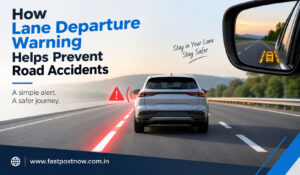
Depending on the vehicle, ADAS can include technologies such as forward collision warning, automatic emergency braking or collision avoidance assistance, lane departure warning, lane-keeping assistance, blind-spot monitoring and adaptive cruise control.
However, ADAS should not be confused with autonomous driving. These systems are designed to assist the driver, not replace the driver’s responsibility.
The current Hyundai CRETA offers Hyundai SmartSense Level 2 ADAS on higher variants, including features such as forward collision avoidance, lane-keeping assistance, blind-spot warning and smart cruise control.
For a first-time buyer, it is important to understand exactly which ADAS functions are available and on which variant before paying extra for them.
10. Strong Vehicle Structure Matters Too
Safety is not only about electronic technology.
A vehicle’s underlying structure plays an important role in protecting occupants during a crash. A strong passenger compartment, appropriate crumple zones and effective restraint systems work together to manage crash energy.
This is one reason buyers should not judge a car’s safety solely by the number of screens, cameras or electronic features it offers.
Look for independent crash-test information from reputable testing organisations and compare the results of vehicles you are seriously considering.
11. Don’t Confuse Convenience Features With Safety Features
A common mistake among first-time buyers is assuming that every advanced-looking feature improves crash protection.
Large displays, ambient lighting, connected-car technology, sunroofs and premium audio systems may improve comfort, but they are not substitutes for fundamental safety equipment.
When comparing cars, prioritise systems such as airbags, ABS with EBD, ESC, seat belts, ISOFIX, tyre-pressure monitoring and appropriate parking assistance before spending more on cosmetic or entertainment features.
12. Always Check the Exact Variant
One of the most important car-buying lessons is that a model name does not tell you the complete safety specification.
A particular car may offer a feature only on higher variants. Even within the same model, equipment can change between trims, transmission options and model years.
The current CRETA, for example, has core safety equipment across the lineup while several advanced technologies, including Level 2 ADAS, are available on higher variants.
Before booking your first car, check the manufacturer’s latest variant-wise specification sheet and confirm the equipment fitted to the exact version you intend to purchase.
Final Thoughts
Understanding car safety features can make the first-time buying process much easier. Instead of being impressed only by styling, mileage or infotainment, look at how effectively the vehicle can help prevent accidents and protect its occupants.
Start with essential technologies such as airbags, ABS, EBD, ESC, seat belts and ISOFIX. Then consider useful additions such as TPMS, parking cameras and sensors. If your budget allows, advanced systems such as ADAS can provide additional driver assistance.
Most importantly, compare the exact variants available in India, because safety equipment can differ significantly between trims.
A good first car should not simply be comfortable and affordable. It should give you confidence that the vehicle has been designed to protect you and your passengers when the unexpected happens.