
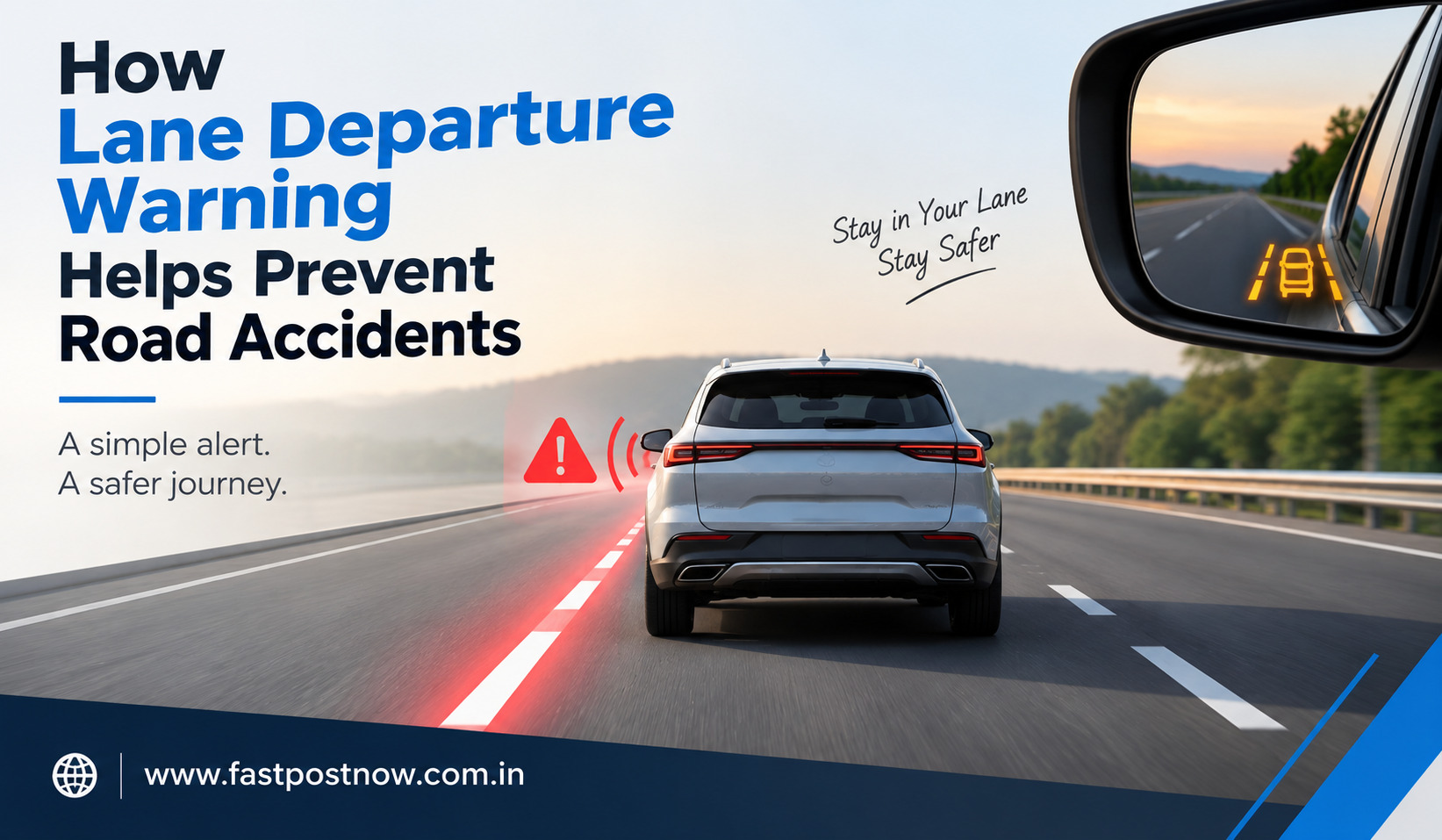
Driving requires constant attention, but even an experienced driver can unintentionally move away from the correct lane. A moment of distraction, tiredness, poor visibility or simply looking away from the road can cause a vehicle to drift. On highways and multi-lane roads, this seemingly small mistake can become dangerous within seconds.
This is where Lane Departure Warning (LDW) can provide an additional layer of protection. It is an advanced driver assistance feature designed to alert drivers when their vehicle appears to leave its lane unintentionally.
LDW does not replace the driver or take complete control of the vehicle. Instead, it acts as an electronic warning system that can draw attention to an unwanted lane departure before it develops into a more serious situation.
What Is Lane Departure Warning?
Lane Departure Warning is an Advanced Driver Assistance System (ADAS) feature that monitors the vehicle’s position relative to visible lane markings.
A camera, usually positioned near the front of the vehicle, observes road markings. When the system detects that the vehicle is moving toward or across a lane boundary without an appropriate turn signal, it can provide an alert.
Depending on the vehicle, this warning may appear as a dashboard notification, audible alert, steering-wheel vibration or another form of driver feedback.
The exact operation varies between manufacturers and models, but the basic purpose remains the same: to alert the driver when the vehicle may be unintentionally leaving its lane.
For example, Hyundai’s current CRETA lists Lane Departure Warning as part of its SmartSense ADAS technology. The current Hyundai VENUE also offers LDW as part of its Level 2 ADAS package.
Why Do Cars Drift Out of Their Lanes?
Unintentional lane departure can happen for several reasons. Driver distraction is one of the most obvious causes. Looking at a phone, adjusting the infotainment system or concentrating on something happening inside the car can briefly take attention away from lane positioning.
Fatigue is another major factor. During a long journey, a tired driver may make slower steering corrections or gradually move toward another lane without realising it.
Other situations can include poor visibility, unfamiliar roads, complicated traffic patterns and momentary loss of concentration.
LDW is designed to help in these situations by providing an additional reminder when the vehicle’s movement suggests an unintended departure.
How Does Lane Departure Warning Work?
The technology behind LDW depends on cameras and software that analyse the road ahead.
The forward-facing camera looks for lane markings and continuously evaluates the vehicle’s position relative to them. The system then calculates whether the car appears to be moving toward a lane boundary.
If certain conditions are met, the system can issue a warning.
Importantly, LDW does not necessarily activate every time a vehicle crosses a line. If the driver has intentionally activated the turn indicator, the system can recognise that the lane change may be deliberate and may suppress the warning.
This distinction helps prevent unnecessary alerts during normal manoeuvres such as overtaking, turning or changing lanes.
How LDW Can Help Prevent Accidents
The biggest benefit of Lane Departure Warning is that it can bring the driver’s attention back to lane position.
Consider a driver travelling on a highway who becomes distracted for a few seconds. The vehicle begins moving toward the edge of its lane. Without any warning, the driver may notice the problem only after the vehicle has already crossed the marking.
With LDW, an alert can draw attention to the developing situation earlier. The driver can then correct the steering and return to the intended position.
This does not guarantee that an accident will be avoided. However, an early warning can give the driver another opportunity to respond.
LDW Is Particularly Useful on Highways
Lane Departure Warning can be especially useful during long highway journeys.
Highways often involve higher speeds, multiple lanes and extended periods of relatively repetitive driving. These conditions can contribute to driver fatigue and reduced concentration.
At higher speeds, even a small amount of unintended steering movement can quickly become significant.
An LDW alert can therefore serve as an additional reminder to remain focused on the road and maintain proper lane discipline.
However, drivers should never become dependent on the system. Hands should remain appropriately positioned for safe driving, and attention should remain focused on the road.
Lane Departure Warning vs Lane Keeping Assist
LDW and Lane Keeping Assist (LKA) are related but different technologies.
LDW primarily warns the driver when the vehicle appears to be leaving its lane unintentionally.
Lane Keeping Assist can go a step further by providing steering assistance to help guide the vehicle back toward the lane.
For example, the current Hyundai CRETA lists both LDW and Lane Keeping Assist within its SmartSense technology. The current Hyundai VENUE also lists both systems.
This distinction is important when comparing cars. A vehicle advertised as having lane assistance may offer several different functions, so buyers should check the manufacturer’s exact specification rather than assuming that every ADAS feature is included.
LDW Is Not Autonomous Driving
One common misunderstanding is that ADAS features make a vehicle capable of driving itself.
That is not what Lane Departure Warning does.
LDW is an assistance technology, not a replacement for the driver. The driver remains responsible for steering, speed control, observation and decision-making.
Even vehicles with more advanced Level 2 ADAS systems require active driver supervision.
For this reason, a driver should never intentionally take their hands off the steering wheel or stop paying attention simply because the car has lane-related assistance.
What Happens When Lane Markings Are Poor?
LDW depends heavily on the system being able to identify lane markings.
If road lines are faded, covered by dirt, obscured by water or snow, or difficult to see because of poor lighting, the system may not operate as expected.
Construction zones and roads with unusual markings can also create challenges.
This is particularly relevant for Indian driving conditions, where lane markings can vary considerably between highways, city roads and smaller routes.
Therefore, LDW should always be treated as a supplementary safety system rather than something that can compensate for poor road visibility.
What About Indian Traffic Conditions?
Indian roads present a mixture of highways, city streets, motorcycles, pedestrians, buses, trucks and frequently changing traffic patterns.
LDW can be useful in suitable conditions, especially on roads where lane markings are clearly visible. However, drivers should understand that the system is not designed to solve every road-safety problem.
On crowded urban roads, lane markings may be inconsistent or frequently crossed as traffic moves around obstacles. In such environments, the driver still needs to rely primarily on observation and judgement.
The technology is most useful when combined with attentive driving rather than treated as an automatic safety shield.
Cars in India Offering Lane Departure Warning
Several current vehicles sold in India offer lane-related ADAS features.
The Hyundai CRETA currently includes Lane Departure Warning as part of its SmartSense Level 2 ADAS technology, with availability depending on the variant.
The Hyundai VENUE is another current India-market example. Its official safety information lists LDW along with Lane Keeping Assist and Lane Following Assist as part of its SmartSense Level 2 ADAS package.
The Kia Sonet is also currently sold in India and its official India page lists LDW, Lane Keep Assist and Lane Following Assist within its ADAS Level 1 technology.
These examples also demonstrate why buyers should check the exact variant. The presence of an ADAS feature on a model does not automatically mean it is available on every version.
Should You Choose a Car With LDW?
For buyers who frequently travel on highways, regularly drive long distances or want additional driver-assistance technology, LDW can be a valuable feature.
However, it should not be the only factor used to select a car.
First consider fundamental safety equipment such as airbags, seat belts, ABS, electronic stability control and a strong occupant-protection structure. Then look at ADAS features such as LDW, LKA, forward collision warning and automatic emergency braking.
Also compare how the technology works in real-world conditions and whether it is included in the variant within your budget.
Final Thoughts
Lane Departure Warning can help prevent road accidents by alerting drivers when their vehicle unintentionally moves toward or across a lane boundary. Its biggest value is providing an extra warning during moments of distraction, fatigue or reduced concentration.
However, LDW is not a substitute for responsible driving. Road conditions, lane markings, weather and system limitations can all affect its performance.
For first-time buyers and experienced drivers alike, the best approach is to view LDW as an additional safety layer. When combined with attentive driving, proper seat-belt use and other active and passive safety technologies, it can contribute to a safer driving experience.
Before buying a car with LDW, always check the manufacturer’s latest India-market specifications and confirm whether the feature is included in the exact variant you plan to purchase.