
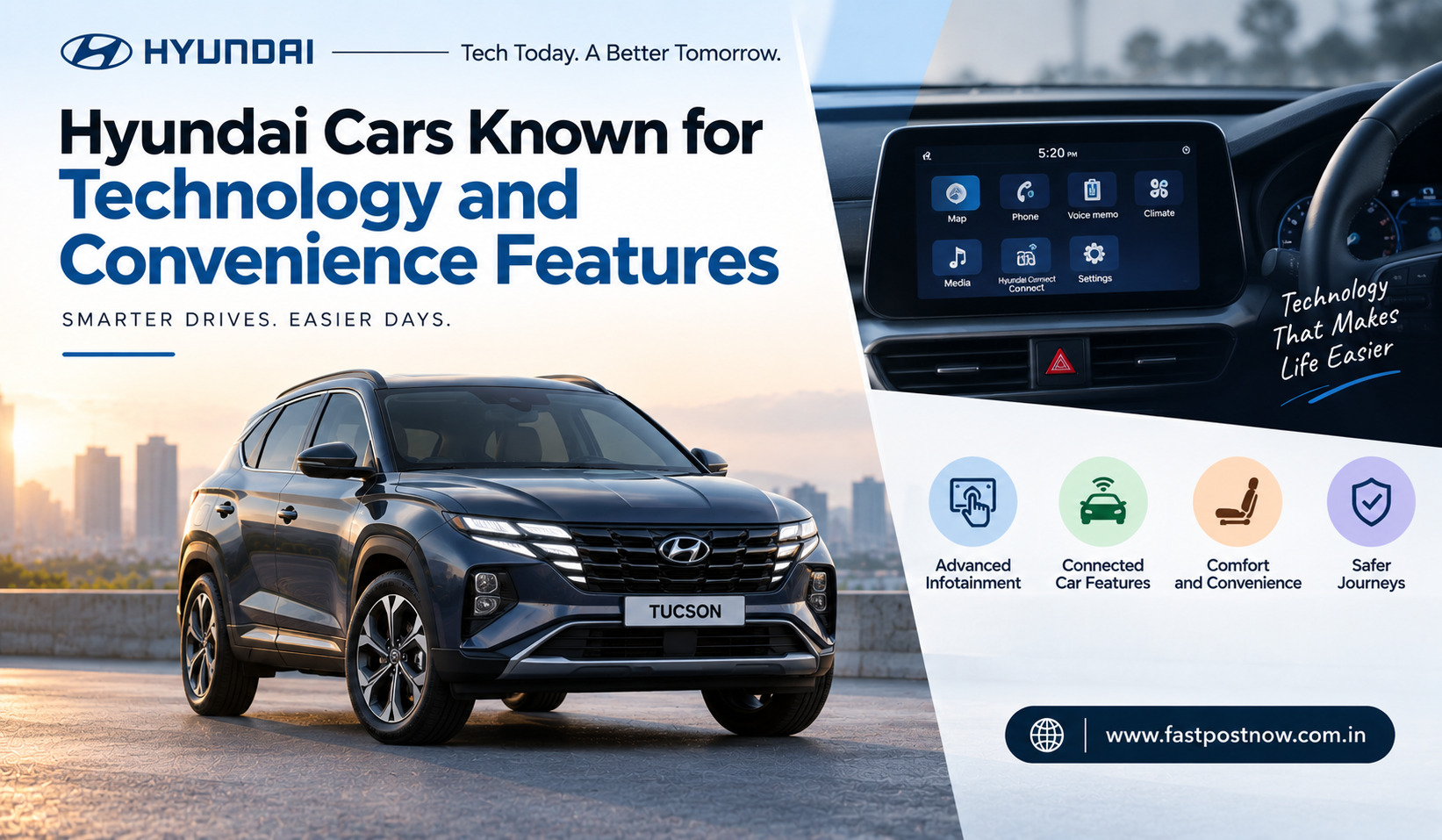
Hyundai has built a strong reputation in India for making technology an important part of the everyday driving experience. Instead of treating advanced features as something reserved only for expensive cars, the company has gradually introduced connected technology, digital displays, smartphone integration, premium audio systems and convenience features across several segments.
This approach has helped Hyundai appeal to buyers who want their car to feel modern without making everyday usability complicated. Features such as wireless smartphone connectivity, connected-car services, digital instrument clusters, automatic climate control, smart keys and over-the-air updates are now important parts of the Hyundai experience.
Among the current Hyundai cars in India, the Venue, Creta and Alcazar stand out for their combination of technology and convenience. Each targets a different type of buyer, but all demonstrate how Hyundai is using technology to make driving easier and more comfortable.
Hyundai’s Technology Philosophy Goes Beyond Screens
A modern car is no longer defined only by engine performance or exterior styling. Buyers increasingly expect their vehicle to work smoothly with their smartphones, provide useful information while driving and offer features that reduce the effort involved in everyday journeys.
Hyundai has responded by combining infotainment, connectivity, comfort and vehicle-control functions.
The important point is that these features are not simply included to make a specification sheet look impressive. Many are designed around practical situations. Remote functions can make vehicle access easier, smartphone connectivity reduces dependence on separate devices, and digital displays can place driving information directly in the driver’s view.
This combination of technology and convenience has become one of Hyundai’s defining characteristics in the Indian market.
Hyundai Venue: Technology in a Compact SUV
The Hyundai Venue is one of the clearest examples of Hyundai’s technology-focused approach in the compact SUV segment.
The current Venue features Hyundai’s connected-car technology and, on higher variants, a dual 12.3-inch curved panoramic display setup. Hyundai also lists wireless Android Auto and Apple CarPlay, a quick-control screen and over-the-air updates among its technology highlights.
This combination gives the Venue a considerably more digital character than many traditional compact SUVs.
The technology is also supported by convenience equipment. Depending on the variant, buyers can get automatic climate control, ventilated front seats, a wireless smartphone charger, electric parking brake with auto hold and drive modes.
The Venue therefore demonstrates how Hyundai is bringing technology into a relatively compact vehicle rather than limiting advanced equipment to larger SUVs.
Connected Features Make the Venue More Convenient
One of the most useful developments in modern Hyundai vehicles is the integration of connected functions.
The Venue’s connected technology allows the vehicle to provide a more digital ownership experience. Hyundai also highlights OTA updates, meaning selected software and infotainment-related updates can be delivered without requiring the owner to visit a service centre for every update.
This is particularly useful as vehicles become increasingly software-driven.
Instead of viewing the car as a fixed product that remains unchanged after purchase, connected technology allows parts of the digital experience to evolve over time.
Hyundai Creta: A Strong Combination of Technology and Comfort
The Hyundai Creta is another major example of the company’s technology strategy.
It combines a spacious SUV cabin with digital displays, connected-car features and premium convenience equipment. Hyundai’s official feature information lists a 26.03 cm digital cluster, a 26.03 cm infotainment and navigation display on selected variants, wireless Android Auto and Apple CarPlay, Bluelink connected-car technology and OTA updates.
Higher variants can also be equipped with an eight-speaker Bose premium sound system.
This makes the Creta particularly attractive to buyers who spend considerable time inside their vehicle. The technology is not limited to navigation or entertainment; it also contributes to the overall cabin experience.
Home-to-Car Connectivity Adds Another Layer
Hyundai’s Home-to-Car feature with Alexa is another example of the company’s attempt to connect the vehicle with the owner’s wider digital environment.
On supported Creta variants, Hyundai says the feature can allow users to perform functions such as starting the engine, adjusting cabin conditions or checking vehicle status remotely through compatible connected services.
This kind of functionality illustrates where automotive convenience is heading.
The car is increasingly becoming another connected device rather than an isolated machine. For people who already use smart-home technology, being able to interact with their vehicle remotely can make everyday routines more convenient.
The Creta Balances Digital Features With Physical Comfort
Technology alone does not make a car convenient.
Hyundai appears to understand this distinction by combining digital equipment with features that directly improve passenger comfort. Depending on the variant, Creta buyers can access features such as premium audio, automatic climate functions, connected services and advanced driver-assistance equipment.
The result is a cabin designed around both digital interaction and traditional comfort.
This balance is important because not every driver wants to operate a car entirely through screens. Physical controls, comfortable seating and straightforward functions remain important, particularly during daily commuting.
Hyundai Alcazar: Technology for Larger Families
For buyers who need more space, the Hyundai Alcazar takes the same technology philosophy into a larger three-row SUV.
The current Alcazar is available as a six- or seven-seater, and Hyundai’s official India pages list a wide range of convenience features. These include digital key technology, dual-zone automatic temperature control, wireless charging for the first and second rows, a Bose eight-speaker sound system and a voice-enabled smart panoramic sunroof on selected variants.
The digital key is particularly interesting because it can allow a compatible smartphone to function as a vehicle key.
For families, convenience can matter just as much as performance. Having easier access to the vehicle, separate climate-control zones and charging options for passengers can make long journeys considerably more comfortable.
Smart Features Are Designed for Everyday Use
One of Hyundai’s strengths is that many of its technology features have a clear everyday purpose.
A wireless phone charger can reduce cable clutter. Wireless smartphone integration can make navigation and music easier to access. Automatic climate control can reduce repeated manual adjustments. Connected-car technology can provide useful information remotely.
Even small features can have a noticeable impact when used every day.
This is why convenience technology has become such an important part of the buying decision. A feature might not seem revolutionary when viewed individually, but dozens of small improvements can make a vehicle feel substantially easier to live with.
Premium Audio Is Another Hyundai Highlight
Entertainment has also become an important part of Hyundai’s technology package.
The Creta and Alcazar can be equipped with Bose premium audio systems on selected variants, while Hyundai’s current Venue information also highlights a Bose eight-speaker system.
For drivers who spend long hours commuting, a high-quality sound system can be more meaningful than a feature that is rarely used.
This is another example of Hyundai combining technology with lifestyle-oriented convenience.
Digital Displays Are Changing the Driving Experience
Traditional analogue instruments are gradually disappearing from modern cars as digital displays become more common.
Hyundai’s current products use digital clusters to provide information in a more flexible format. The Creta, for example, offers a 26.03 cm digital cluster on selected variants, while the Venue goes further with its dual 12.3-inch curved panoramic display arrangement on applicable versions.
Digital displays can make it easier to present navigation, vehicle information and other data without requiring multiple separate screens.
However, the real benefit depends on how clearly the information is presented. Good technology should reduce distraction rather than create additional complexity.
Which Hyundai Is Best for Technology?
The answer depends on what type of vehicle the buyer needs.
The Venue is attractive for someone who wants advanced digital features in a compact SUV. Its latest technology package includes large curved displays, smartphone connectivity, OTA updates and several premium convenience features.
The Creta offers a broader combination of technology, comfort and SUV practicality. Its connected services, digital displays, premium audio and smartphone integration make it one of Hyundai’s most technology-focused mainstream SUVs.
The Alcazar takes the idea further for larger families by adding features such as digital key technology, dual-zone climate control, multi-row wireless charging and premium audio.
Final Thoughts
Hyundai’s approach to technology is not simply about adding bigger screens or longer feature lists. Its strongest advantage is the way technology is increasingly integrated into everyday convenience.
The Venue brings sophisticated digital features into the compact SUV category. The Creta combines connectivity, entertainment and comfort in a popular midsize SUV package. The Alcazar extends these ideas into a larger family vehicle with additional convenience features for passengers.
As cars become more connected, Hyundai is positioning its vehicles around an important idea: technology should make driving and ownership easier rather than simply making the car appear futuristic.
For Indian buyers looking for a modern vehicle, Hyundai’s current lineup offers several choices where connectivity, convenience, comfort and digital technology work together as part of the overall driving experience.