
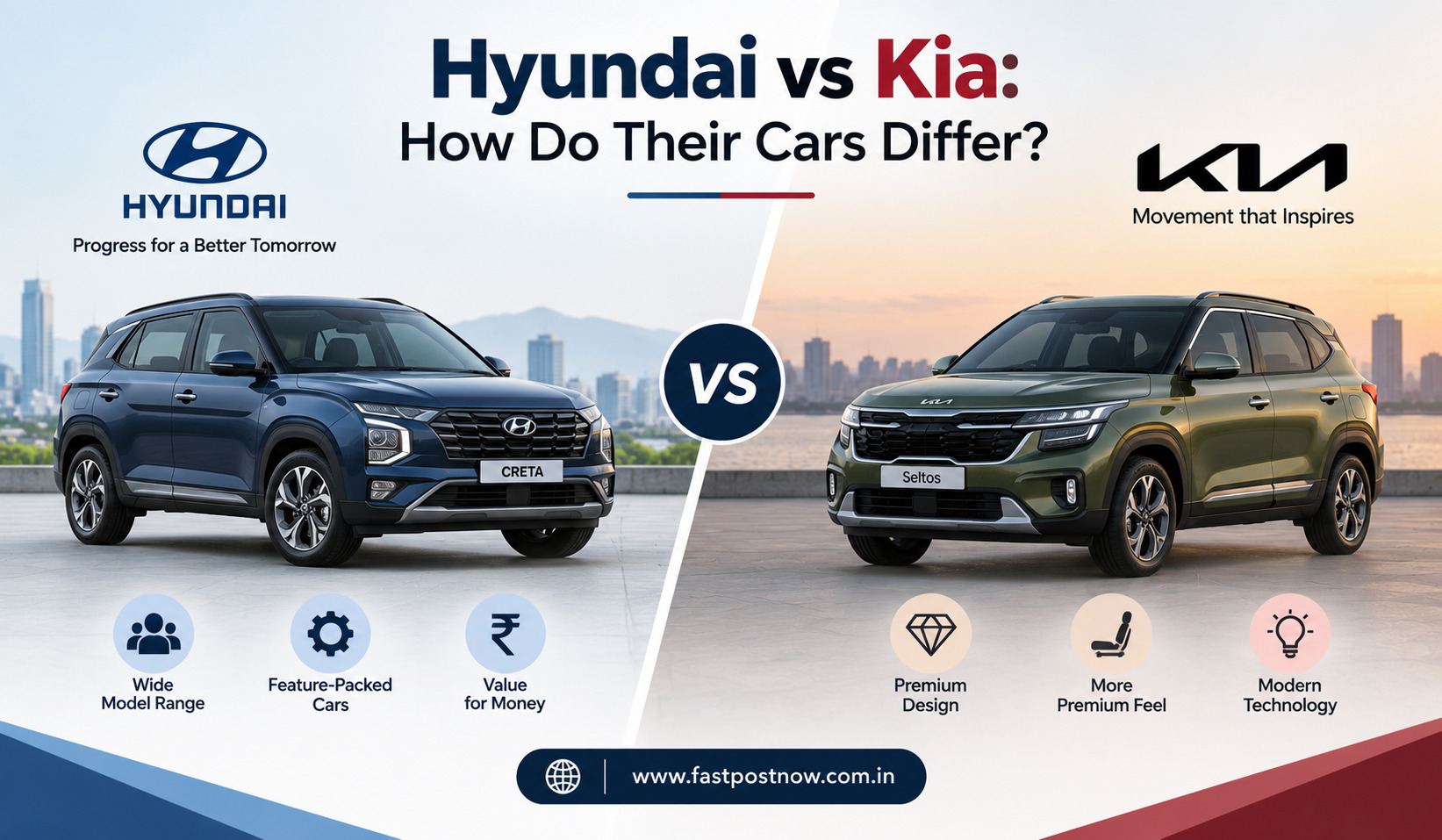
Hyundai and Kia are two of the most recognizable Korean car brands in India, and their connection often creates confusion for buyers. Both companies offer SUVs, family cars, modern technology, automatic transmissions and feature-rich cabins. Some of their vehicles also compete directly in the same segments.
However, Hyundai and Kia are not simply selling identical cars with different badges. Each brand has developed its own design language, product positioning and customer appeal. Hyundai generally emphasizes broad-market practicality, comfort and technology, while Kia often puts greater emphasis on bold styling, premium-looking interiors and a more youthful character.
So, when comparing Hyundai vs Kia, how are their cars actually different?
Hyundai and Kia Share Technology but Have Different Identities
Hyundai and Kia are closely related companies within the same automotive group, which means they can share engineering resources, platforms and powertrain technology.
That common technical foundation is one reason some Hyundai and Kia models can feel similar from behind the wheel. But sharing technology does not mean the vehicles are identical.
The brands tune their products differently and give them different designs, features and positioning. This allows them to compete in similar categories without completely overlapping each other.
For Indian buyers, the difference is particularly noticeable when comparing vehicles such as the Hyundai Creta with the Kia Seltos, or the Hyundai Venue with the Kia Sonet.
Hyundai Has a More Mainstream and Family-Oriented Image
Hyundai has built a strong presence in India by offering cars across a wide range of segments. Its current Indian portfolio includes models such as the Exter, Venue, Creta, Alcazar, Verna, i20, Grand i10 Nios and other vehicles.
This broad portfolio gives Hyundai a relatively mainstream positioning.
Many Hyundai products are designed to appeal to families looking for a combination of comfort, convenience, safety and technology. The brand also has a strong focus on making its cars easy to live with in daily traffic.
The Creta is a good example. It sits in one of India’s most competitive SUV categories and offers several engine and transmission combinations, allowing buyers to choose according to their driving requirements. Hyundai’s current India specifications list a 1.5-litre petrol engine, 1.5-litre diesel and 1.5-litre turbo-petrol option for the Creta.
Kia Uses a Bolder Design Philosophy
Kia has developed a more dramatic visual identity in the Indian market.
Its vehicles typically use stronger exterior detailing, distinctive lighting designs and a more aggressive interpretation of SUV styling. The Seltos, Sonet and Syros demonstrate this approach particularly well.
Kia’s current India lineup includes the Seltos, Sonet, Syros and Carens family, along with electric and premium products.
The Seltos, for example, uses Kia’s distinctive grille and lighting treatment and offers features such as Star Map LED DRLs, a large touchscreen and digital instrumentation depending on the variant.
This makes Kia particularly attractive to buyers who want their vehicle to have a strong visual presence.
Hyundai vs Kia: The SUV Comparison
SUVs are where the comparison becomes most interesting.
The Hyundai Creta and Kia Seltos are direct competitors in the midsize SUV segment. Both offer petrol and diesel powertrains, automatic transmission choices and a long list of technology and safety features.
The current Creta offers a 1.5-litre naturally aspirated petrol with 6-speed manual or IVT transmission, a 1.5-litre diesel with 6-speed manual or 6-speed automatic, and a 1.5-litre turbo-petrol engine paired with a 7-speed DCT.
The Seltos has a similarly broad powertrain strategy. Kia’s official specifications list a 1.5-litre naturally aspirated petrol, 1.5-litre turbo-petrol and 1.5-litre diesel, with transmission choices including manual, IVT, DCT and automatic options depending on the variant.
The key difference therefore isn’t simply engine availability. Buyers should look at the way each vehicle combines its powertrain with equipment, styling, cabin design and driving character.
Kia Often Pushes Premium Features Aggressively
One of Kia’s major strengths in India has been its ability to offer impressive technology and premium-feeling equipment.
The Seltos, for instance, can be equipped with features such as a panoramic sunroof, Bose premium audio system, 360-degree camera and advanced driver-assistance technology on appropriate variants. Kia’s official Seltos page lists Level 2 ADAS with 17 autonomous features and an eight-speaker Bose system among its highlighted equipment.
Hyundai also offers a substantial amount of technology, particularly in higher variants of models such as the Creta and Creta N Line.
The difference is more about presentation and positioning. Kia frequently uses technology and dramatic design as major parts of its identity, while Hyundai tends to integrate those features into a broader comfort-and-convenience package.
Hyundai Concentrates Strongly on Comfort and Convenience
Hyundai has traditionally done well with buyers who want a relaxed everyday driving experience.
Its vehicles often focus on comfortable seating, convenient controls, smooth automatic options and features that make urban driving easier.
The Creta demonstrates this philosophy through its combination of different powertrains and transmission choices. The availability of a conventional petrol, diesel and turbo-petrol gives buyers more flexibility depending on their usage.
For someone spending most of the week driving through city traffic, this broad choice can be more important than having the sportiest-looking vehicle.
Kia Has a More Youthful Personality
Kia’s products generally target buyers who want something visually distinctive.
The Sonet is an example of this approach in the compact SUV category. The Seltos occupies the midsize SUV space with a more aggressive appearance, while the Syros introduces a different interpretation of a compact SUV with its upright design and technology-focused positioning.
This doesn’t mean Kia cars are exclusively for younger buyers. Rather, the brand’s styling and marketing tend to give its products a more expressive personality.
Hyundai, by comparison, often takes a broader approach that can appeal to first-time buyers, families and older customers alike.
Hyundai Has a Strong Sedan Presence
Another important difference is the role of sedans.
Hyundai continues to sell the Verna in India, giving buyers a modern sedan option alongside its extensive SUV portfolio. The current Verna offers a 1.5-litre turbo-petrol and 1.5-litre naturally aspirated petrol engine, with manual and automatic transmission choices depending on the variant.
Kia’s Indian strategy is more heavily centered on SUVs and family-oriented vehicles.
This gives Hyundai an advantage for buyers who specifically want a conventional sedan rather than an SUV.
Both Brands Are Strong on Technology
It would be unfair to say that one brand is simply more technologically advanced than the other.
Both Hyundai and Kia offer connected-car functions, digital displays, touchscreen infotainment systems, smartphone connectivity, advanced safety systems and premium comfort features depending on the model and variant.
The difference is often how these features are packaged.
Hyundai tends to present technology as part of an overall ownership experience, while Kia often makes advanced equipment a major part of the vehicle’s appeal.
Therefore, buyers should compare individual variants rather than assuming one brand always offers more equipment.
Which Brand Has Better Cars?
There is no universal winner between Hyundai and Kia.
Hyundai can be a better match for buyers who prioritize comfort, broad model choice, family usability, easy everyday driving and a balanced ownership experience.
Kia may appeal more to buyers who prioritize bold styling, premium-looking interiors, feature-rich variants and a more distinctive road presence.
The best choice can also change depending on the segment. Someone comparing the Venue and Sonet may have different priorities from someone choosing between the Creta and Seltos.
Hyundai vs Kia: Which Should You Choose?
The Hyundai vs Kia decision should ultimately come down to the individual model and variant rather than the brand name alone.
If you prefer understated practicality and a wide range of family-oriented choices, Hyundai deserves serious consideration. If you want aggressive styling and a technology-heavy, premium-feeling cabin, Kia may be more appealing.
There is also considerable overlap between the two brands because they share technological foundations. That makes a direct test drive especially valuable.
For example, the current Creta and Seltos both offer sophisticated powertrain choices, but their design, cabin presentation and feature packaging give them different personalities.
Final Thoughts
Hyundai and Kia may come from the same broader automotive family, but they have developed different identities in the Indian market.
Hyundai focuses strongly on versatility, comfort, practicality and broad customer appeal. Kia takes a more expressive route, using bold styling, premium presentation and technology to distinguish its products.
Neither approach is automatically better.
For a buyer, the smartest strategy is to compare the exact models, variants, engines, transmissions, safety equipment and ownership requirements before making a decision. Once those details are considered, the difference between Hyundai and Kia becomes much clearer.
In short, Hyundai is generally the more comfort-and-family-focused choice, while Kia leans toward bold design and feature-rich appeal. But both brands offer capable, modern cars, making the final decision more about personal priorities than simply choosing one badge over another.