
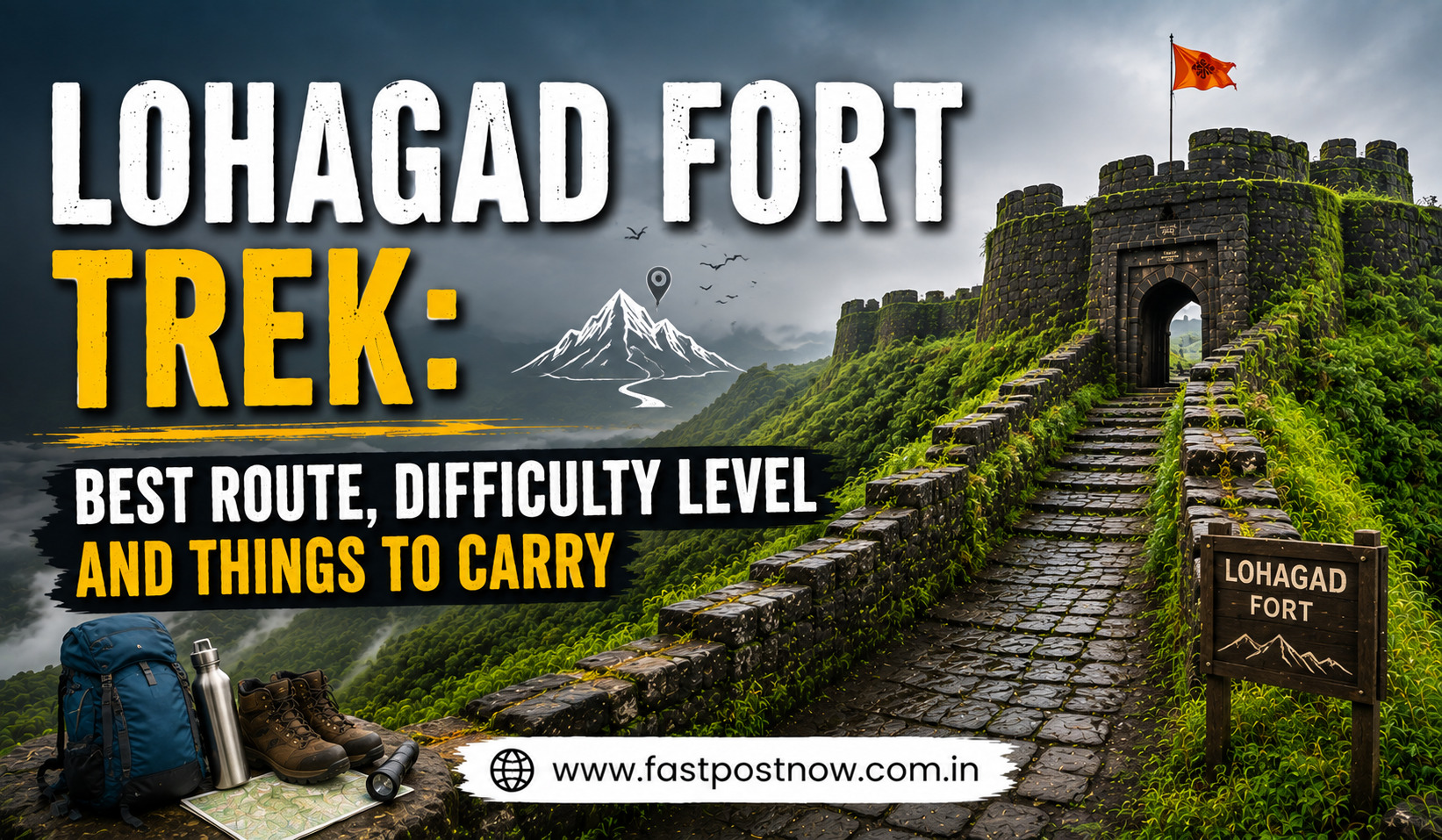
Best Route, Difficulty Level and Things to Carry
Lohagad Fort is one of Maharashtra’s most popular trekking destinations, particularly for people looking for a combination of history, nature and an accessible Sahyadri trek. Located near Lonavala, the fort rises to around 1,033 metres above sea level and is popularly known as the “Iron Fort.” Its historic gateways, stone walls, wide plateau and the famous Vinchukata, or Scorpion’s Tail, make the destination appealing to both first-time trekkers and experienced outdoor enthusiasts.
What makes the Lohagad trek different from many other fort treks around Pune and Mumbai is its relatively approachable terrain. The climb does not demand technical trekking skills, yet the changing landscape keeps the journey interesting. During the monsoon, the hills become intensely green, mist often covers the surrounding valleys and small streams appear along the route. In winter, clearer skies provide better long-distance views, making the fort equally attractive outside the rainy season. Maharashtra Tourism describes Lohagad as a relatively easy and popular trek suitable for beginners and families.
Why Lohagad Fort Is Worth Visiting
Lohagad is not simply a destination for a weekend hike. The fort carries considerable historical importance and has changed hands across different periods of Maharashtra’s history. According to the Maharashtra Tourism Department, the fort was captured by Chhatrapati Shivaji Maharaj in 1648 and later became part of the Mughal-controlled territory following the Treaty of Purandar in 1665. Its strategic location helped make it an important military stronghold.
Today, visitors can walk through the fort’s historic gateways, explore its remaining structures and follow the fortification walls. One of the most recognizable features is Vinchukata, a long, narrow fortified spur extending away from the main fort. Its shape resembles the tail of a scorpion, which explains the popular name “Scorpion’s Tail.” From the elevated sections, trekkers can enjoy expansive views of the Sahyadri landscape and nearby valleys.
The fort’s appeal becomes even stronger when combined with the surrounding attractions. Bhaja Caves, Visapur Fort, Karla Caves and Pawna Lake are all located in the wider Lonavala region, allowing visitors to turn a simple fort visit into a broader weekend experience.
Lohagad Fort Trek Difficulty Level
For most reasonably fit people, the Lohagad trek falls in the easy to moderate range. It is considerably more accessible than several demanding Sahyadri treks, which is one reason it has become popular with beginners, families and casual trekking groups.
The final approach involves stone steps and a steady ascent, so the trek should not be treated as a completely effortless walk. Monsoon conditions can make the steps and rocks slippery, while strong winds and poor visibility can affect the experience near exposed sections. Beginners should therefore maintain a comfortable pace rather than trying to complete the climb quickly.
The Maharashtra Tourism Department lists the trek from the Malavli side as taking around two to three hours and describes Lohagad as an accessible trekking experience. The exact duration, however, depends on the starting point, weather, crowd levels, breaks and the amount of time spent exploring the fort.
Quick Trek Overview
| Trek Factor | Lohagad Fort |
| Location | Near Lonavala, Maharashtra |
| Elevation | About 1,033 metres |
| Difficulty | Easy to moderate |
| Popular base area | Malavli / Lohagadwadi |
| Approx. trekking time | Around 2–3 hours from the popular approach |
| Best season | Monsoon and post-monsoon; winter is also pleasant |
| Main attraction | Historic fort, gateways and Vinchukata |
| Suitable for | Beginners, families and regular trekkers |
Best Route for the Lohagad Fort Trek
The Malavli route is among the most popular ways to reach Lohagad. Malavli is also a convenient railway access point for travellers coming from Pune or the Lonavala side. From the station, visitors can proceed toward the base area and continue toward Lohagadwadi before beginning the main ascent.
The journey itself is part of the experience. The surrounding countryside changes gradually as you move away from the town and toward the Sahyadri hills. During the rainy season, fields and slopes turn green, while clouds frequently settle over the mountain ridges.
Another advantage of the Lohagadwadi approach is that a motorable road reaches close to the fort’s base. This provides an easier option for visitors who may not be able to undertake the longer approach from Malavli. Maharashtra Tourism notes that the motorable route to Lohagadwadi makes the fort accessible throughout the year.
For trekkers who want the complete experience, beginning from Malavli gives the journey more of a traditional trekking character. The route takes longer, but the additional walking allows visitors to experience the changing landscape rather than simply arriving close to the fort entrance.
What to Expect on the Trail
The beginning of the trek is generally manageable, allowing trekkers to settle into a comfortable rhythm. As the route progresses, the gradient increases and the historic stone steps become more prominent. The steps themselves are a reminder that Lohagad was designed as a fortified mountain stronghold rather than simply a scenic hilltop.
The monsoon changes the character of the route dramatically. Water flows over sections of rock and the surrounding vegetation becomes dense and vibrant. Mist can appear suddenly, reducing visibility and creating a dramatic atmosphere around the fort. While this makes for excellent photographs, it also means trekkers need to pay closer attention to their footing.
Once you reach the fort area, take time to explore rather than immediately beginning the descent. The fortifications, gates, water structures and open plateau provide plenty to see. The Vinchukata section is particularly popular because of its unusual shape and panoramic setting.
Best Time to Visit Lohagad Fort
The monsoon season from roughly July to September is one of the most popular periods for Lohagad. The surrounding Sahyadris become lush green and the combination of mist, clouds and fresh vegetation gives the fort a dramatic appearance. Maharashtra Tourism specifically highlights the monsoon as a popular time for visiting Lohagad, while also recommending October to March for pleasant conditions.
However, monsoon trekking requires additional caution. Wet stone steps can become slippery, and crowds can increase substantially on weekends. Anyone planning a rainy-season trek should begin early, avoid rushing and keep rain protection easily accessible.
The post-monsoon and winter period offers a different experience. Between October and February, the weather is generally more comfortable for walking, and clearer skies can provide better views of the surrounding landscape. For photographers and people interested in exploring the fort at a relaxed pace, this can be an excellent period to visit.
Summer is possible but less comfortable because exposed portions of the route can become hot. Trekkers choosing the warmer months should start early and carry sufficient drinking water.
Things to Carry for the Lohagad Trek
Packing correctly can make a significant difference, especially if you are visiting during the monsoon. The goal should be to carry the essentials without making your backpack unnecessarily heavy.
Here are the main things worth keeping in your trekking bag:
- Comfortable trekking shoes with good grip, particularly during the monsoon.
- Sufficient drinking water and some light energy-rich snacks.
- A small first-aid kit with basic supplies.
- Mobile phone, power bank and a waterproof pouch for electronics.
- Cap, sunglasses and sunscreen for sunny conditions.
- A small backpack that keeps both hands free while climbing.
Avoid carrying unnecessary valuables or excessive luggage. A lightweight backpack is much easier to manage on stone steps, particularly during the descent.
Safety Tips for First-Time Trekkers
Although Lohagad is considered an accessible trek, basic mountain safety should still be followed. Wet steps can be particularly challenging during heavy rainfall, so proper footwear is more important than fashionable trekking gear.
Stay on established routes and avoid climbing over fort walls or standing near unstable edges for photographs. The desire to capture a dramatic picture should never take priority over safety. During foggy weather, it is also better to remain with your group instead of wandering away to explore isolated sections.
The following precautions are especially useful:
- Start early to avoid excessive heat and heavy crowds.
- Walk slowly on wet stone steps and rocky surfaces.
- Keep enough water and food for the entire outing.
- Check weather conditions before starting the trek.
- Avoid littering and do not damage the historic structures.
- If trekking during heavy rain, reassess conditions instead of taking unnecessary risks.
How to Reach Lohagad Fort
Lohagad is conveniently accessible from both Pune and Mumbai, making it a popular weekend destination. By road, travellers can reach Lonavala and continue toward Malavli and Lohagadwadi. Maharashtra Tourism places Lohagad roughly 60 km from Pune and about 100 km from Mumbai by road, although actual travel time varies depending on traffic and the route taken.
For travellers using public transport, Malavli is an important railway access point. From there, local transport can be used to reach the trekking approach. Lonavala is another major railway station and offers additional transport options toward the fort area.
The road journey from Pune is particularly convenient for a day trip, while visitors from Mumbai may prefer starting early because of the longer travel distance.
Lohagad Fort and Nearby Attractions
One of the best reasons to plan a Lohagad trip is the number of attractions available nearby. Bhaja Caves are particularly significant for history enthusiasts. The ancient Buddhist rock-cut complex adds a cultural dimension to the trip and can be combined with a visit to Lohagad depending on the day’s schedule.
Visapur Fort is another popular destination located close to Lohagad. It sits on the same broader mountain landscape and is generally considered more demanding than Lohagad. Trekkers with sufficient time and fitness can plan the two forts as part of a larger outing, although completing both requires additional time and energy.
Pawna Lake is another popular attraction around the region. Its open landscape and surrounding hills make it a natural extension to a Lonavala-area weekend trip.
Lohagad Trek: A Good Choice for Beginners?
For someone attempting their first Sahyadri fort trek, Lohagad can be a sensible starting point. The route is relatively accessible, the fort is well known and the climb does not generally require technical mountaineering skills. The availability of a road approaching Lohagadwadi also provides flexibility for people who want to reduce the trekking distance.
That does not mean beginners should underestimate the trek. Fitness, weather and footwear all influence the difficulty. A person who is not accustomed to uphill walking may find the stone steps tiring, particularly during the descent.
The best approach is to treat Lohagad as an introduction to mountain trekking rather than a race. Take regular short breaks, stay hydrated and allow enough time to explore the fort.
Responsible Tourism at Lohagad
Lohagad attracts large crowds, especially during the monsoon. Increased tourism brings greater responsibility for visitors. Plastic waste, food packaging and other litter can quickly damage the natural character of the trail and surrounding landscape.
Trekkers should carry their waste back with them and avoid disturbing plants, animals or historic structures. Loud music can also spoil the experience for other visitors and local residents.
Preserving Lohagad is particularly important because it represents both Maharashtra’s natural landscape and its historic heritage. A responsible visit ensures that future trekkers can experience the same combination of mountain scenery and history.
Final Thoughts
Lohagad Fort offers the kind of trekking experience that makes the Sahyadris attractive to both beginners and regular outdoor enthusiasts. The combination of a manageable climb, historic fortifications, panoramic mountain scenery and the distinctive Vinchukata spur gives the destination an appeal that goes beyond a simple weekend hike.
The best route depends on how much trekking you want to experience. Starting around Malavli provides a longer and more immersive approach, while the Lohagadwadi road offers a simpler alternative. Monsoon visitors can expect spectacular greenery and mist but should take extra care on slippery surfaces, while winter and post-monsoon travellers can enjoy more comfortable weather and clearer views.
For anyone planning a fort-focused trip around Lonavala, Lohagad is a strong choice. With sensible preparation, suitable footwear and respect for the historic and natural surroundings, the trek can become a memorable introduction to Maharashtra’s famous Sahyadri fort trails.
Frequently Asked Questions
Is Lohagad Fort Trek difficult?
Lohagad is generally considered an easy to moderate trek and is suitable for many beginners and families. The stone steps and uphill sections can still be tiring, particularly in wet weather.
How long does the Lohagad Trek take?
The popular approach from the Malavli side takes approximately two to three hours according to Maharashtra Tourism, although the actual duration depends on the starting point, pace, weather and breaks.
Can beginners trek to Lohagad Fort?
Yes. Lohagad is widely regarded as an accessible trek for beginners. However, first-time trekkers should wear suitable footwear, carry adequate water and avoid rushing on slippery sections.
What should I carry for the Lohagad Trek?
Water, comfortable trekking shoes, rain protection during the monsoon, snacks, a basic first-aid kit, a power bank and protection for electronic devices are useful essentials.
Is Lohagad Fort accessible without trekking?
Yes. A motorable road reaches Lohagadwadi, providing an easier approach for visitors who do not want to undertake the longer trekking route.