
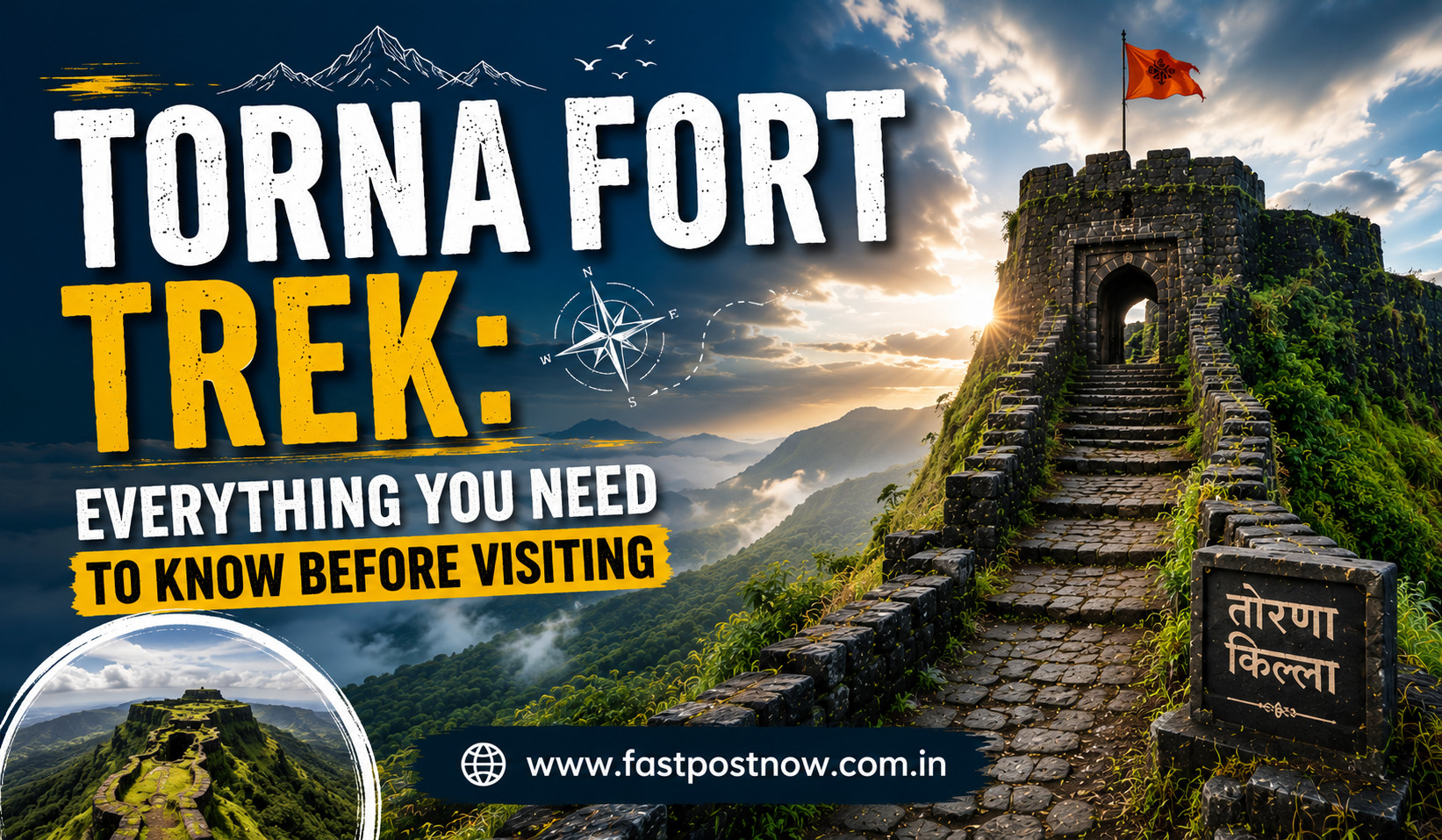
Everything You Need to Know Before Visiting
Torna Fort is one of Maharashtra’s most exciting destinations for travellers who want to combine trekking with Maratha history. Rising prominently in the Sahyadri Mountains of Pune district, the fort offers a demanding climb, expansive valley views and a strong connection with the early years of Chhatrapati Shivaji Maharaj’s kingdom.
Also known as Prachandagad, Torna is widely recognised as the highest hill fort in Pune district, standing at around 1,403 metres above sea level. Its height, rugged terrain and long ridges make it a favourite among experienced trekkers, while its historical importance attracts travellers interested in Maharashtra’s past.
Torna occupies a special place in Maratha history because Chhatrapati Shivaji Maharaj captured the fort in 1646 when he was only 16 years old. Maharashtra Tourism describes this victory as an important early step in the establishment of Swarajya.
For anyone planning the trek for the first time, however, Torna should not be treated as an ordinary weekend walk. The route includes steep climbs, rocky sections and exposed areas, and weather can significantly change the difficulty of the trail. Good preparation is therefore essential.
Torna Fort History
The early history of Torna stretches back several centuries. The fort was known by different names before becoming associated with the Maratha period. Its strategic location in the Sahyadri range made it valuable to rulers seeking control over the surrounding mountain routes.
The fort came under Chhatrapati Shivaji Maharaj’s control in 1646. At the time, he was still a teenager, and the capture of Torna became one of the early milestones in his effort to establish an independent kingdom.
After capturing the fort, Shivaji Maharaj strengthened its defences and expanded the fortifications. Its large size contributed to the name Prachandagad, which is often interpreted as referring to the fort’s enormous scale.
Torna subsequently became an important part of the growing Maratha network of hill forts. Its location also allowed it to be connected strategically with nearby forts, particularly Rajgad.
For modern visitors, the ruins scattered across the hilltop provide an opportunity to understand how these forts were designed to support military activity while taking advantage of the natural landscape.
Why Torna Is Popular Among Trekkers
Torna is attractive because the trek offers a genuine mountain adventure rather than simply a short climb to a viewpoint.
The trail begins near Velhe village and gradually enters the Sahyadri landscape. As trekkers climb higher, the surroundings become more rugged and the views become wider.
The fort’s height is another major attraction. At approximately 1,403 metres, Torna is the highest fort in Pune district, according to Maharashtra Tourism.
The final approach includes sections where trekkers need to pay close attention to their footing. During the monsoon, the combination of mud, wet rocks, strong winds and reduced visibility can make the experience considerably more challenging.
Experienced trekkers often enjoy Torna because it demands physical effort while providing a strong sense of achievement at the summit.
Torna Fort Trek Route
The most popular trekking route begins from Velhe village. From there, the trail climbs toward the fort through forested and rocky sections.
The initial portion is relatively gradual, allowing trekkers to settle into a comfortable rhythm. The slope becomes steeper as the trail continues upward.
Maharashtra Tourism identifies the Velhe route as the principal trekking approach and describes Torna as a destination suited to trekkers.
As the route progresses, trekkers encounter more exposed sections and rocky terrain. The final climb requires attention, particularly when the trail is wet.
Once the upper fortification is reached, the landscape opens dramatically. The surrounding Sahyadri ranges and valleys create a rewarding backdrop after the long ascent.
How difficult is the Torna trek?
Torna is generally considered a moderate-to-difficult trek depending on the weather and route conditions. A reasonably fit trekker can complete it, but beginners should prepare beforehand rather than arriving without any trekking experience.
The difficulty comes less from technical climbing and more from the length of the ascent, steep sections and changing terrain.
A steady pace is far more effective than trying to climb quickly. Trekkers should take short breaks, drink water regularly and monitor their energy levels.
Best Time to Visit Torna Fort
Torna is open to a variety of travel experiences throughout the year, but the season can dramatically change the trek.
The monsoon is one of the most popular periods. The Sahyadri slopes become green, waterfalls appear and clouds often move across the mountain ridges. For nature photographers, this can be the most beautiful time to visit.
However, the monsoon also presents the greatest challenges. Rocks become slippery, trails can become muddy and strong winds may affect exposed sections.
Winter offers a much more comfortable trekking environment. Cooler temperatures make the climb easier, while clearer skies can provide excellent views from the fort.
Summer is possible for experienced trekkers but can be physically demanding. The exposed trail offers little protection from the afternoon sun, making an early start particularly important.
| Season | Trek Experience | Difficulty |
| Monsoon | Green landscape, mist and waterfalls | Moderate to difficult |
| Winter | Cooler weather and clear views | Moderate |
| Summer | Dry landscape and strong heat | More demanding |
For first-time visitors, winter is generally the safest choice if the primary goal is comfortable trekking.
Best Time of Day to Start
Starting early in the morning is one of the best decisions a Torna trekker can make.
The temperature is usually lower during the morning, which reduces fatigue during the steep sections. An early start also provides more daylight for exploring the large fort complex.
Weekend crowds can increase during the monsoon and winter trekking seasons, so early arrivals can help trekkers avoid some congestion on narrower sections.
A late start is particularly risky for beginners because the trek can take longer than expected. Reaching the summit late in the day may leave insufficient time for a safe descent.
What to Carry for the Trek
Torna does not require highly technical mountaineering equipment, but basic trekking preparation is essential.
A reliable pair of trekking shoes with good grip is probably the most important item. Casual shoes can become uncomfortable and slippery on rocky terrain.
Water should be carried in sufficient quantities because availability along the route can be limited or unpredictable. Light, energy-rich food can also help during the climb.
Essential trekking items
- Trekking shoes with a strong grip.
- Adequate drinking water and light snacks.
- Rain protection during the monsoon.
- First-aid supplies, personal medicines and a power bank.
Avoid carrying an unnecessarily heavy backpack. Every extra kilogram becomes more noticeable during a long uphill climb.
Major Attractions at Torna Fort
The fort’s large size means that reaching the top does not mark the end of the experience. Several historic sections and natural features are worth exploring.
Menghai Temple
Menghai Devi Temple is one of the notable religious sites on the fort. Trekkers often use the area around the temple as a resting point.
The temple also reflects the cultural traditions that have remained connected with Maharashtra’s historic forts.
Budhla Machi
Budhla Machi is one of Torna’s most striking sections. The ridge extends outward from the main fort and provides dramatic views of the surrounding valleys.
The terrain can become exposed, so visitors should remain cautious and avoid approaching unstable edges.
Zunjar Machi
Zunjar Machi is another important section of Torna. The fortifications and rugged landscape illustrate the strategic importance of the fort.
Walking through these areas allows visitors to understand why Torna’s natural geography made it a powerful defensive position.
Torna’s Connection with Rajgad
One of the most interesting aspects of Torna is its relationship with Rajgad.
The two forts are connected through the Sahyadri landscape and have historically been associated with Maratha military strategy. Rajgad later became the capital of Shivaji Maharaj’s kingdom for around 26 years.
Today, experienced trekkers sometimes attempt longer routes connecting Torna and Rajgad. The journey offers a much more demanding adventure than a standard Torna trek.
For first-time visitors, however, completing Torna alone is the better choice. The combined route requires greater stamina, route knowledge and careful planning.
How to Reach Torna Fort
Velhe village is the primary base for the Torna trek. Travellers from Pune can reach the Velhe region by road before beginning the climb.
Private vehicles are convenient because they allow trekkers to reach the starting point early in the morning. Public transport options can also be used toward nearby areas, although schedules may be less convenient for early starts.
Because road conditions, public transport schedules and local arrangements can change, travellers should confirm current information before leaving.
The road journey itself provides views of the rural landscape surrounding the Sahyadris and becomes part of the overall travel experience.
Torna for First-Time Trekkers
Torna can be attempted by beginners who have reasonable physical fitness, but it is not the ideal choice for someone completely new to outdoor walking.
If this is your first trek, some preparation can make a significant difference. Regular walking, stair climbing and basic cardiovascular exercise in the weeks before the trek can help build stamina.
During the trek, beginners should remain with their group and avoid rushing ahead. It is particularly important to maintain caution around steep and exposed sections.
Weather should also influence the decision to continue. If heavy rain, strong winds or poor visibility make the route unsafe, turning back is a sensible decision rather than a failure.
Food and Water Around Torna
Small food options may be available around the base village, particularly during popular trekking periods. However, trekkers should not depend entirely on vendors for essential supplies.
Carrying sufficient water and basic food from the starting point is recommended.
Local village food can be part of the experience after completing the trek. Supporting small local businesses also allows tourism to contribute directly to the surrounding community.
At the same time, visitors should take all packaging back with them and avoid leaving waste along the trail.
Nearby Attractions
The region around Torna offers several opportunities for travellers who want to extend their trip.
Rajgad Fort
Rajgad is the most obvious addition for trekking enthusiasts. Its historical importance and connection with Torna make the two forts particularly interesting to explore as part of a wider Maratha heritage journey.
Panshet Dam
Panshet Dam offers a change of scenery from the rocky fort landscape. The reservoir and surrounding hills provide a peaceful setting for travellers who want to relax after trekking.
Velhe Region
The villages around Velhe provide a glimpse into rural Maharashtra. Visitors can explore the local landscape and experience the quieter side of the Sahyadri region.
Safety Tips for Torna Trek
Safety should remain the priority throughout the trek. The mountain environment can change quickly, especially during the monsoon.
Trekkers should avoid taking shortcuts or following unmarked routes simply to save time. Staying with the established trail reduces the chance of getting lost.
Photography also requires caution. Some of the fort’s most spectacular viewpoints are close to steep drops, but visitors should never stand on unstable rocks for photographs.
Important safety precautions
- Check weather conditions before starting.
- Avoid solo trekking if you are unfamiliar with the route.
- Keep enough daylight for the return journey.
- Do not approach cliff edges or climb unstable fort walls.
Responsible Tourism at Torna
Torna’s growing popularity has increased the importance of protecting its natural and historical environment.
Plastic waste is particularly damaging in mountain ecosystems. Visitors should carry reusable bottles and take all waste back to the base.
The historic walls, temples and other structures should not be damaged or marked with graffiti. Even small acts of vandalism can gradually destroy the character of the fort.
Trekkers should also respect local communities and avoid creating unnecessary noise in villages or blocking roads with parked vehicles.
The future of Torna as a trekking destination depends on visitors treating the fort as a heritage site rather than simply a recreational backdrop.
Torna Trek: Quick Travel Overview
| Category | Details |
| Fort Name | Torna Fort |
| Other Name | Prachandagad |
| District | Pune, Maharashtra |
| Approx. Elevation | 1,403 metres |
| Trek Starting Point | Velhe village |
| Trek Type | Mountain and heritage trek |
| Difficulty | Moderate to difficult |
| Best Season | October to February |
| Monsoon | Scenic but slippery |
| Major Features | Budhla Machi, Zunjar Machi, Menghai Temple |
Conclusion
Torna Fort offers one of the most rewarding combinations of adventure and history in the Pune region. Its position as the highest hill fort in Pune district gives the trek a physical challenge, while its connection with the early years of Chhatrapati Shivaji Maharaj’s kingdom adds a deeper historical dimension.
The climb from Velhe village takes trekkers through changing terrain before opening onto a vast hilltop filled with fortifications, temples, ridges and panoramic views. Budhla Machi and Zunjar Machi add to the sense of adventure, while the fort’s historic remains provide a glimpse into its strategic role.
For first-time visitors, preparation is essential. Choose suitable footwear, carry enough water, start early and check the weather before beginning the trek. Winter offers comfortable conditions, while monsoon provides extraordinary scenery for those prepared for a more challenging trail.
Most importantly, do not rush Torna. Give yourself enough time to experience the route, explore the fort and return safely before darkness.
Whether you are an experienced trekker searching for a challenging Sahyadri adventure or a history enthusiast wanting to follow one of the earliest milestones in Maratha history, Torna Fort offers an experience that is both physically rewarding and culturally significant. With responsible travel and proper preparation, the journey to Prachandagad can become one of the most memorable fort treks in Maharashtra.
Frequently Asked Questions
Why is Torna Fort famous?
Torna is famous for its historical connection with Chhatrapati Shivaji Maharaj. He captured the fort in 1646 at the age of 16, making it an important early milestone in the establishment of Swarajya.
What is another name for Torna Fort?
Torna is also known as Prachandagad, a name associated with its large scale.
How high is Torna Fort?
Torna stands at approximately 1,403 metres above sea level and is recognised as the highest hill fort in Pune district.
Is Torna suitable for beginners?
Beginners with reasonable fitness can attempt the trek, but it is more demanding than a simple hill walk. First-time trekkers should prepare properly and preferably go with experienced companions.
Where does the Torna trek start?
The popular trekking route begins at Velhe village in Pune district.