Luxury cars are often associated with powerful engines, premium interiors, advanced technology and eye-catching designs. Volvo takes a somewhat different approach. While its cars offer the comfort and sophistication expected from a luxury brand, safety remains one of the strongest ideas behind the company’s products.
For Volvo, safety is not simply a list of airbags or electronic driver-assistance features. The brand has spent decades developing cars around the idea that technology, engineering and human behaviour should work together to reduce the consequences of accidents and, whenever possible, help prevent them.
This philosophy can be seen across Volvo’s current Indian range, including models such as the XC60, XC90 and fully electric EX30. Their different sizes and powertrains may appeal to different buyers, but the focus on occupant protection and preventive safety remains a common theme.
Safety Has Been Part of Volvo’s Identity for Decades
Volvo’s reputation for safety did not begin with modern radar sensors or digital driver assistance. One of the company’s most important contributions came in 1959, when Volvo engineer Nils Bohlin developed the three-point safety belt.
Volvo later made the patent available to other car manufacturers, allowing the design to become widely adopted across the automotive industry. According to Volvo Cars India, the company has continued studying real-world crashes and driving events since 1970 to improve its approach to vehicle safety.
That history helps explain why safety remains such a central part of the Volvo brand. Instead of treating safety as an optional luxury, Volvo builds it into the broader concept of vehicle design.
The Volvo XC60 Brings Safety Into Everyday Luxury
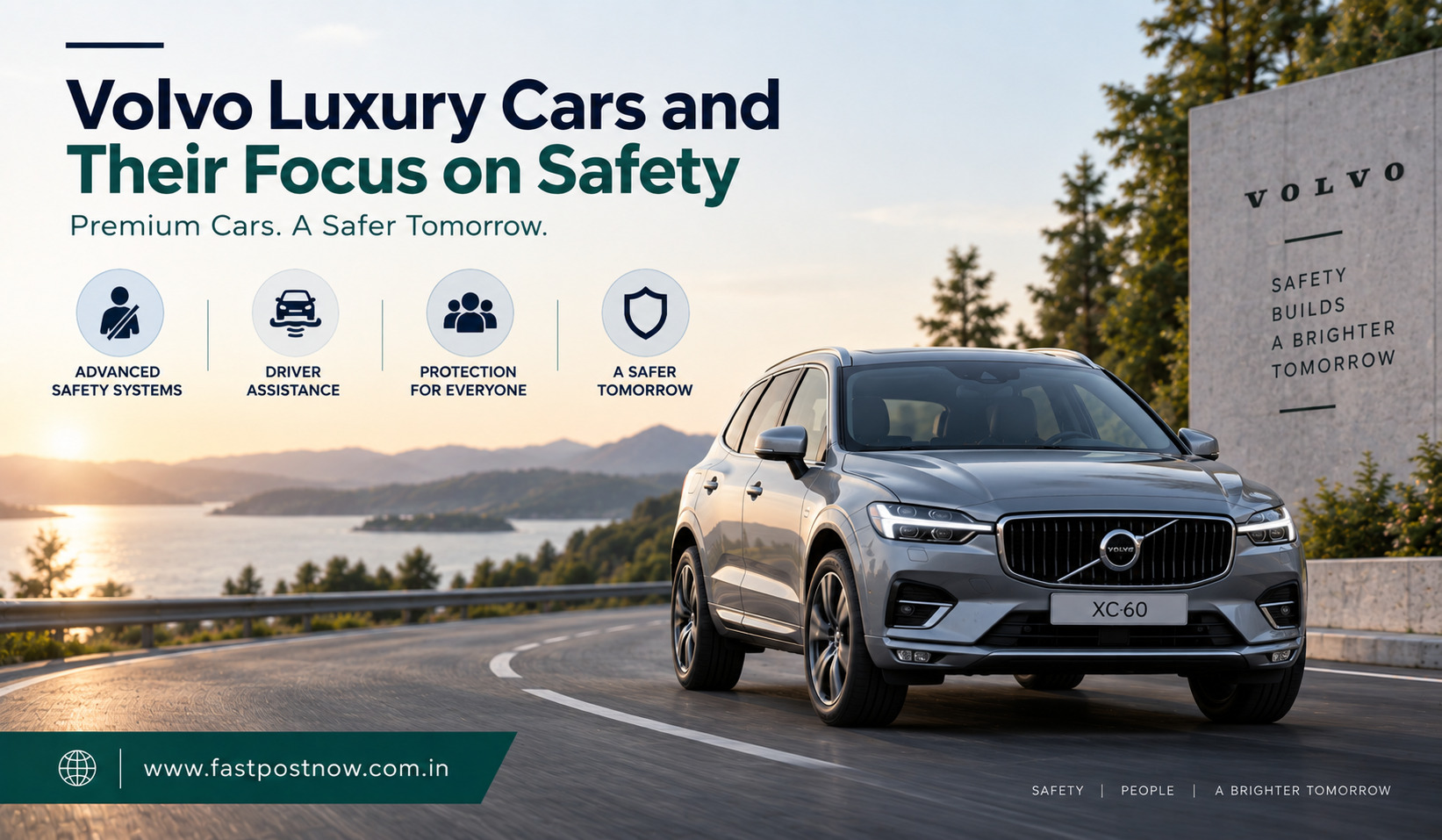
The Volvo XC60 is positioned as a premium midsize SUV and is currently offered in India as a petrol mild-hybrid model with all-wheel drive. Volvo Cars India lists the current XC60 with five seats, an automatic transmission and a 48-volt mild-hybrid system.
Its safety equipment illustrates how Volvo combines traditional protective engineering with electronic assistance. The official Indian specification page lists features such as blind-spot information, cross-traffic alert with low-speed auto brake, adaptive cruise control, a 360-degree camera, inflatable curtains, side-impact protection and whiplash protection.
These technologies are designed for different situations. A blind-spot system can help when changing lanes, while cross-traffic assistance can be useful when reversing from a restricted parking space. Adaptive cruise control can reduce some of the workload involved in maintaining a safe following distance.
The important point is that these systems are designed to support the driver rather than replace the driver.
The XC90 Extends the Same Philosophy to a Larger SUV
For families looking for a larger luxury SUV, the Volvo XC90 occupies a different position in the range. Volvo Cars India currently lists the XC90 as a seven-seat mild-hybrid SUV with a petrol engine, automatic transmission and all-wheel drive. Its Indian specification page lists 250 hp of power and a 48-volt mild-hybrid system.
The XC90 also demonstrates how safety technology becomes particularly useful in a large family vehicle.
Volvo’s official feature information includes blind-spot assistance, collision avoidance technology, lane-related assistance, cross-traffic alert with automatic braking and a 360-degree camera. The vehicle can warn the driver about certain potential collisions and may automatically apply braking in specific situations when the driver does not respond.
For a seven-seat vehicle, occupant protection also matters beyond the front seats. The XC90 specification page lists inflatable curtains, ISOFIX mounting points, safety belts, side-impact protection and whiplash injury protection.
This reflects an important part of Volvo’s philosophy: safety should not disappear when a vehicle becomes larger, more luxurious or more family-oriented.
Preventing an Accident Is as Important as Protecting Occupants
A modern luxury car can be extremely strong in a crash, but avoiding the crash in the first place is even better. This is why Volvo puts considerable emphasis on preventive safety.
Its technology can monitor the surroundings using cameras, sensors and other systems. Depending on the model and equipment, the car can identify potential hazards and provide warnings or braking assistance.
Volvo describes its broader approach as “Safe Space Technology”, which combines protective measures with systems designed to help prevent accidents. The company also says that its safety development increasingly uses data, artificial intelligence and machine learning to improve vehicle responses over time.
This is particularly relevant as luxury cars become increasingly software-driven. Safety is no longer limited to the physical structure of the vehicle; software has become an important part of how the car understands its surroundings.
The EX30 Shows That Safety Is Not Limited to Large Volvo Cars
Volvo’s safety philosophy is also visible in its smaller electric models. The Volvo EX30 is currently listed on Volvo Cars India as a fully electric SUV and is available in India in a Single Motor Extended Range configuration. Volvo’s official specifications list five seats, rear-wheel drive, 200 kW of power and an estimated WLTP range of up to 480 km, with Volvo noting that some figures are preliminary and subject to certification.
More importantly for this topic, the EX30’s specification page includes features such as blind-spot information, collision avoidance and mitigation, a 360-degree camera, inflatable curtains, ISOFIX mounting points and whiplash protection.
The EX30 also introduces safety thinking suited to crowded urban environments. Volvo highlights a door-opening alert that can warn occupants when opening a door could put a cyclist or another road user in danger.
This shows that Volvo does not view safety as something reserved for its biggest or most expensive vehicles.
Safety and Scandinavian Design Work Together
Volvo’s Scandinavian design philosophy is often associated with clean lines, uncluttered interiors and functional details. That philosophy also influences how safety technology is presented.
Instead of overwhelming the driver with unnecessary information, modern Volvo models aim to make important information accessible through digital displays, cameras and driver-assistance systems.
This becomes increasingly important as vehicles gain more features. A safety system is only useful if the driver can understand its warnings and use the technology appropriately.
Volvo’s approach therefore connects physical protection with usability. Comfortable seats, clear displays, visibility, driver assistance and occupant protection all contribute to the overall experience.
Luxury Does Not Have to Mean Excess
The luxury-car market often competes through bigger screens, stronger engines, elaborate interiors and extensive equipment lists. Volvo follows that competition but gives safety a prominent role in the definition of luxury.
The XC60 demonstrates this with its combination of premium equipment and driver-support technology. The XC90 takes the same concept into a larger seven-seat format. Meanwhile, the EX30 demonstrates that a smaller electric Volvo can carry the same safety-first philosophy into a more urban package.
That gives Volvo a distinctive position for buyers who want premium comfort without treating safety as an afterthought.
Why Volvo’s Safety Focus Still Matters
Car safety has changed dramatically over the years. Seatbelts, airbags and stronger passenger compartments remain essential, but modern vehicles can now monitor traffic, identify potential hazards and assist drivers during difficult situations.
Volvo’s contribution is its decision to make safety a defining part of the brand rather than simply another specification category.
For Indian luxury-car buyers, this approach can be particularly appealing to families who spend significant time on highways, in busy city traffic or on long-distance journeys. Features such as blind-spot monitoring, collision avoidance, cross-traffic assistance and advanced braking support can provide an additional layer of assistance when conditions become complicated.
Of course, no driver-assistance system can eliminate every risk. Volvo itself states that its safety systems complement safe driving practices and do not replace the driver’s attention and judgement.
Conclusion
Volvo luxury cars stand out because safety is deeply connected to the company’s identity. From the three-point seatbelt legacy to modern collision-avoidance technology, the brand has consistently focused on protecting people rather than treating safety as a secondary feature.
Current models such as the XC60 and XC90 combine premium interiors, modern powertrains and advanced driver assistance, while the EX30 demonstrates that Volvo’s safety philosophy extends into the electric and compact-SUV space.
For buyers considering a luxury car, Volvo offers a different interpretation of premium motoring. The appeal is not only about how sophisticated the car looks or how comfortable it feels. It is also about the engineering and technology working quietly in the background to help protect the people inside and around the vehicle.
That safety-first approach remains one of the clearest reasons Volvo continues to have a distinctive place in the luxury car market.